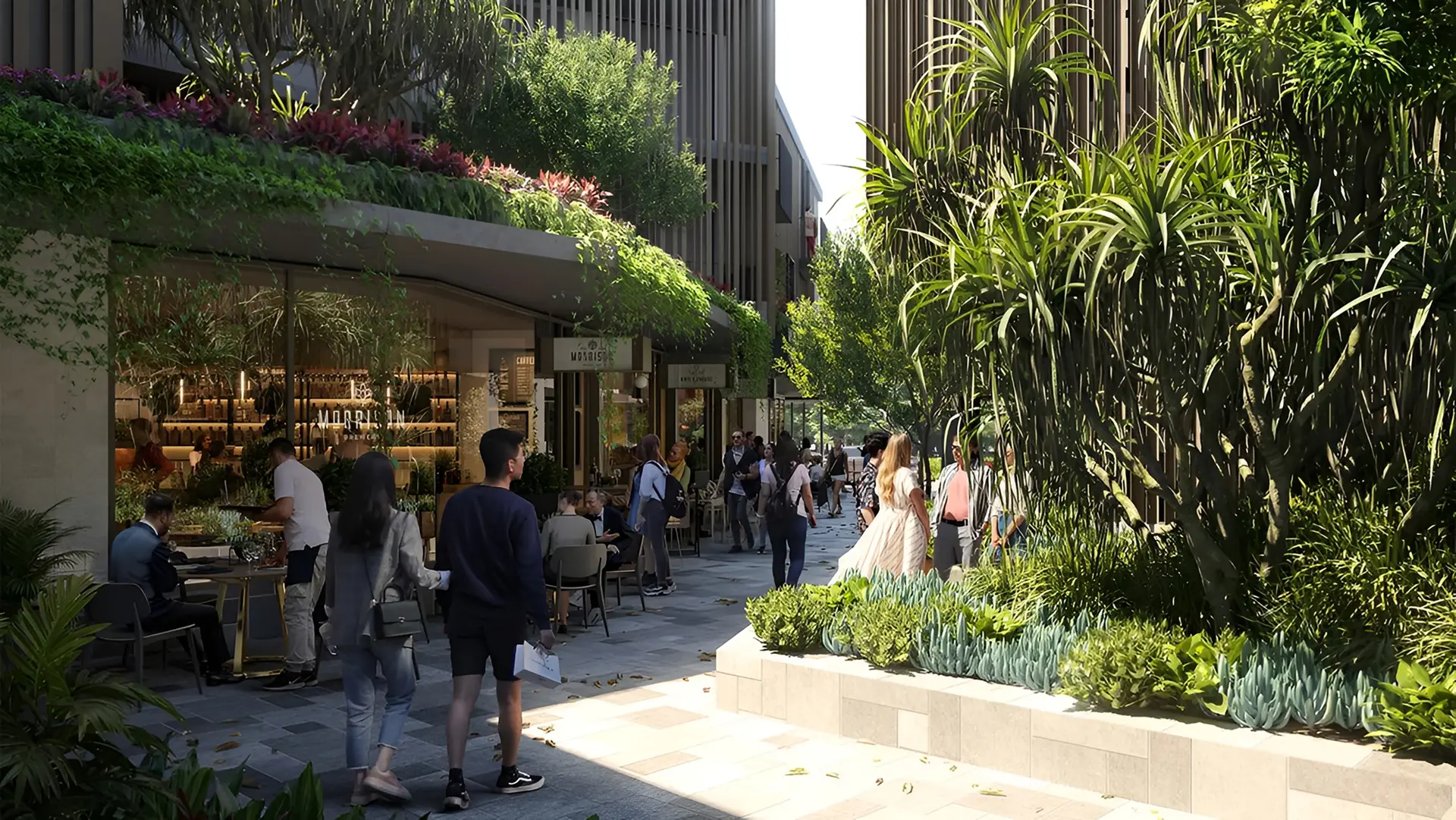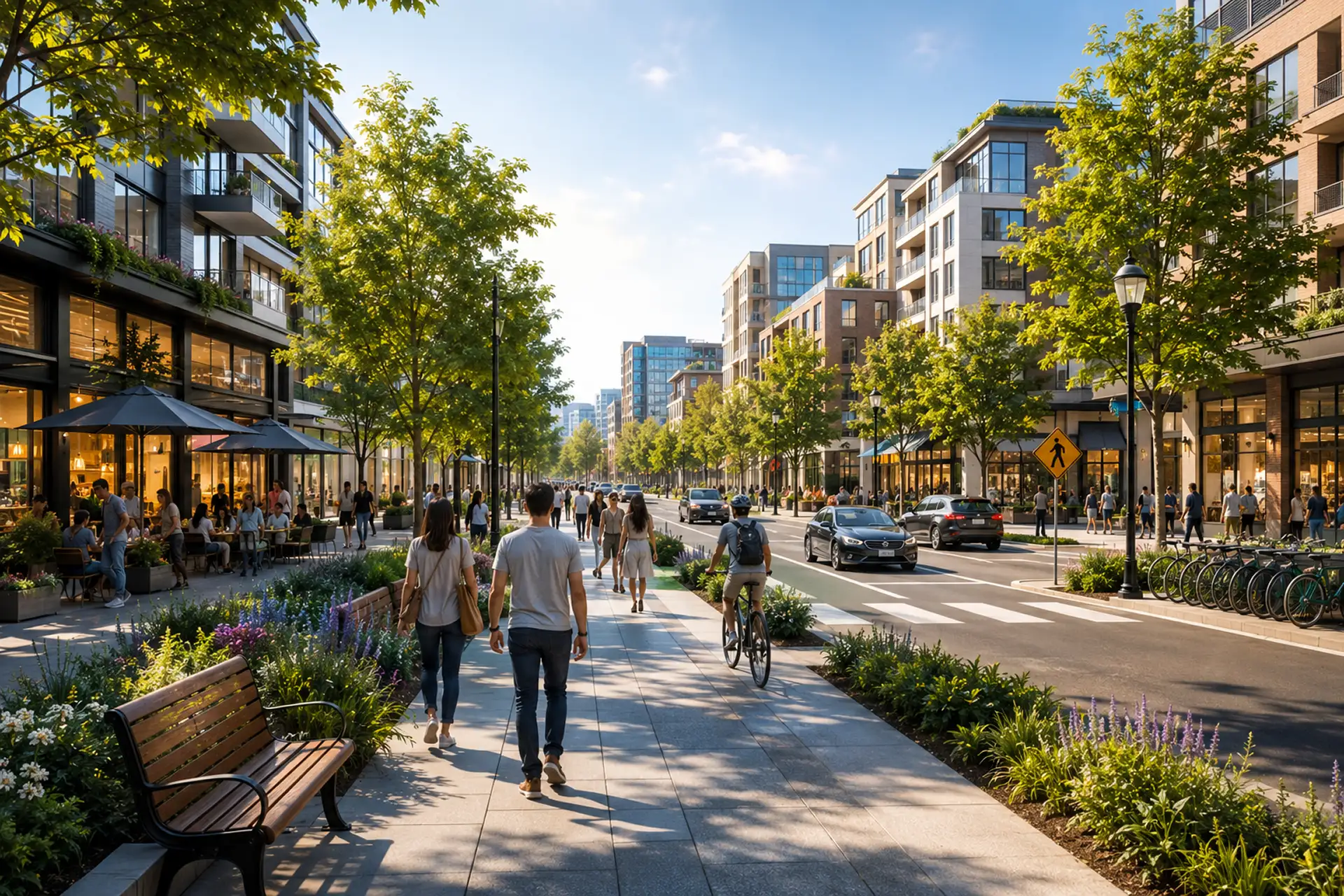
For decades, real estate value was defined by access—access to roads, parking, transportation networks, and visibility. The assumption was simple: if people could arrive easily, the development would succeed.
That assumption is no longer enough.
Across residential, hospitality, and mixed-use developments, a different factor is becoming increasingly influential in determining long-term performance: walkability.
Not as an urban design ideal, but as a measurable driver of demand, retention, and value creation.
In many markets, walkability is no longer just a quality-of-life feature. It is becoming one of the most important differentiators in real estate.
Traditional development models prioritized vehicular access and isolated land uses.
People would drive to a destination, complete a single activity, and leave. Retail was a stop. Work was a destination. Leisure was a separate trip.
Modern urban behavior is fundamentally different.
People now expect environments where multiple activities can occur within a single, continuous experience—living, working, dining, socializing, and leisure within a walkable network.
This shift introduces a new concept: experience density.
The value of a place is increasingly defined not by how far people can travel to reach it, but by how much they can experience once they arrive without needing to leave. [1]
Walkability is the physical structure that enables this density.
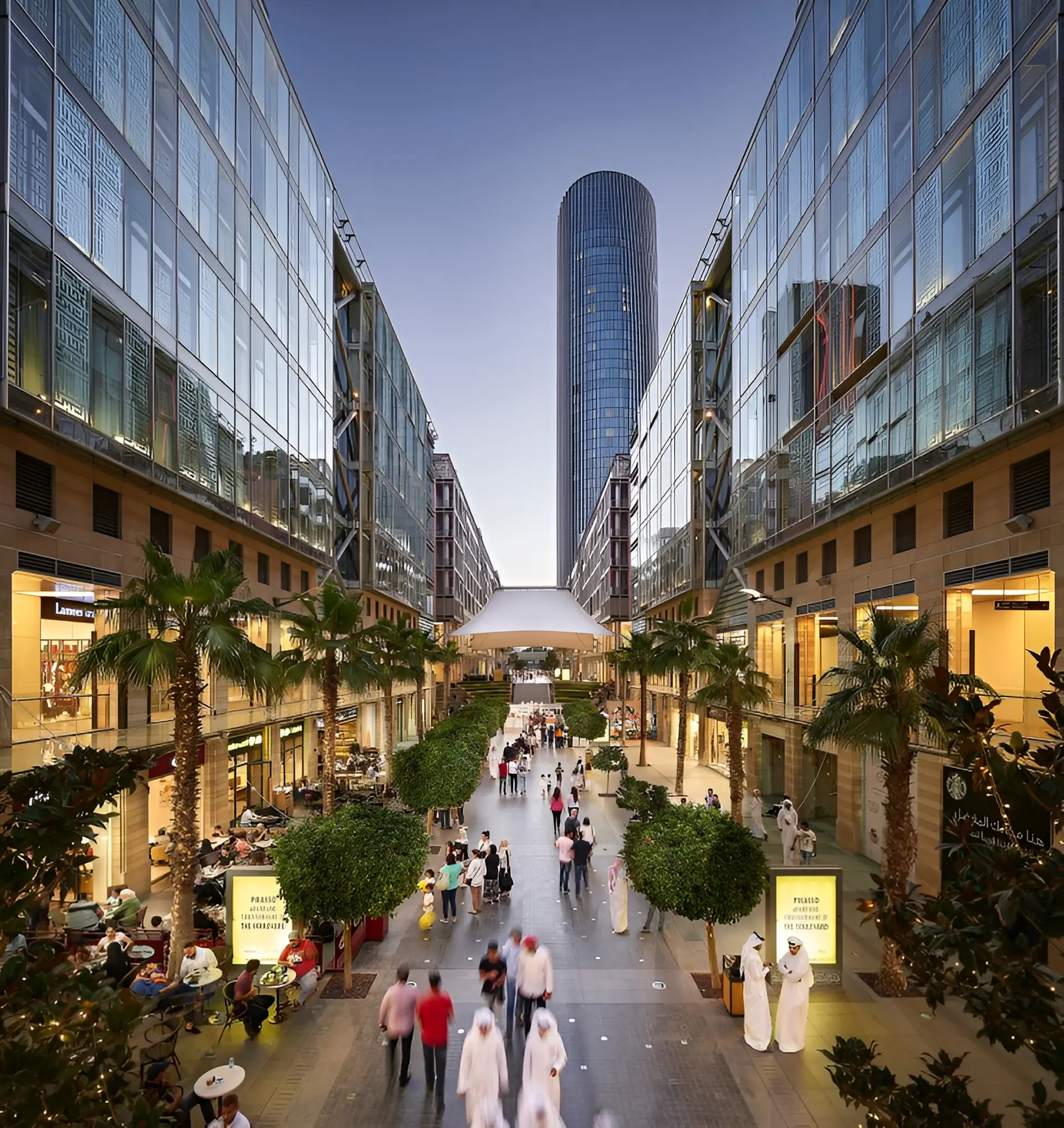
In mixed-use and hospitality environments, dwell time is one of the strongest indicators of performance.
The longer people stay within a destination, the more likely they are to spend, engage, and return.
Walkable environments naturally extend dwell time by reducing friction between uses. When destinations are connected through shaded paths, intuitive circulation, active frontages, and human-scale distances, movement becomes effortless. [2]
People are more likely to explore. More likely to discover. More likely to stay longer than originally intended.
This has direct implications for retail performance, F&B revenue, and overall asset productivity.
Walkability is not a lifestyle feature. It is a revenue mechanism.
Historically, premium value was attached to individual buildings—tower height, façade quality, unit size, or interior specification.
Today, value is increasingly distributed across the network of spaces that connect buildings.
Streets, courtyards, shaded corridors, plazas, waterfronts, and pedestrian loops are becoming more influential in shaping user perception than individual architectural icons.
A well-designed building in a disconnected environment underperforms.
A simple building in a highly walkable, activated environment can outperform expectations.
The reason is simple: people do not experience buildings in isolation. They experience sequences of spaces. [3]
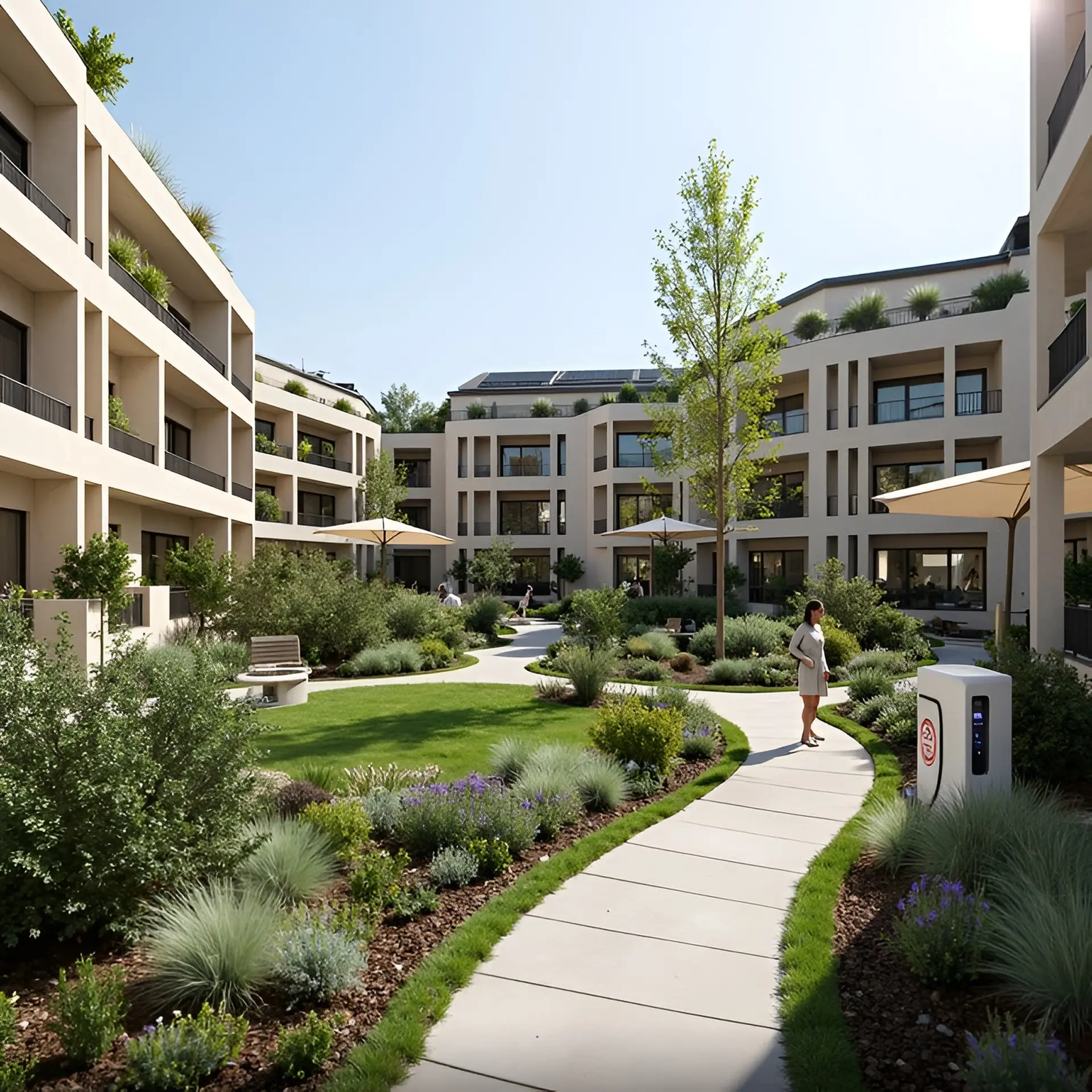
In hospitality developments, walkability directly influences guest experience.
Guests increasingly evaluate destinations based on ease of movement, proximity of amenities, and the ability to access multiple experiences without relying on transport.
In mixed-use developments, walkability enables integration between residential, retail, office, and entertainment functions.
This integration is what transforms developments into destinations rather than collections of assets.
When people can move effortlessly between daily activities, the entire development benefits from increased activity and economic spillovers. [4]
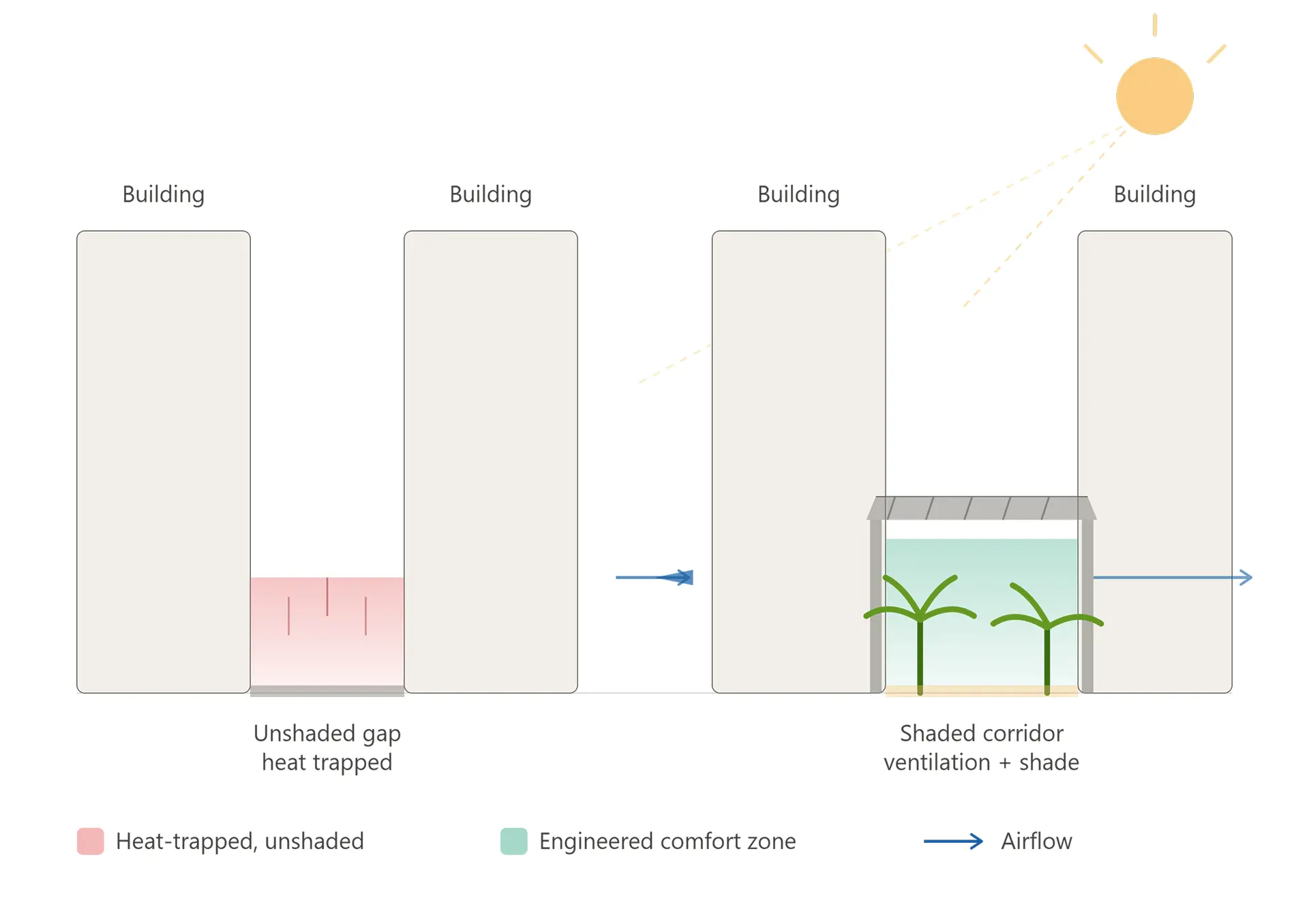
In regions with hot climates, walkability is often misunderstood as impractical.
But the issue is not walkability itself, it is design quality.
Shading strategies, microclimates, material selection, building orientation, ventilation corridors, and landscape design all determine whether walking is comfortable or not.
In high-performing developments, walkability is not left to climate conditions. It is engineered.
This is where many developments underperform: they design buildings, but not environmental comfort between them.
Walkability is increasingly becoming a proxy for quality.
Not just design quality—but investment quality.
Walkable environments tend to support:
In competitive markets, these factors compound over time. [5]
As a result, walkability is shifting from a design ambition to a financial strategy.
The future of real estate is not defined by how quickly people can move through a place.
It is defined by how long they choose to stay in it.
Walkability is the foundation of that shift.
It transforms developments from points of transaction into environments of experience.
And in an increasingly competitive global market, the most valuable places will not be those that people can reach easily—but those they do not feel the need to leave [1].