For a long time, the public realm was treated as the space left between buildings.
Roads, sidewalks, plazas, and landscaped areas were often designed after core building decisions had already been made. Their role was functional rather than strategic—movement, access, and basic environmental quality.
That approach is no longer sufficient.
In contemporary mixed-use, hospitality, and residential developments, the public realm has become one of the strongest determinants of asset performance. It influences how long people stay, how often they return, how they perceive value, and whether a place becomes a destination or remains a transit point.
In many successful developments today, the public realm is no longer a supporting layer.
It is the product itself.
Great public realms are defined by how effortlessly people move through them.
Connectivity is not just about providing routes between destinations. It is about creating intuitive, continuous networks that allow users to move without friction or confusion.
When connections are poorly designed, even high-quality buildings underperform. When they are seamless, entire districts become more active and economically productive. [1]
Movement is the foundation of experience.
People do not relate to scale the way buildings do.
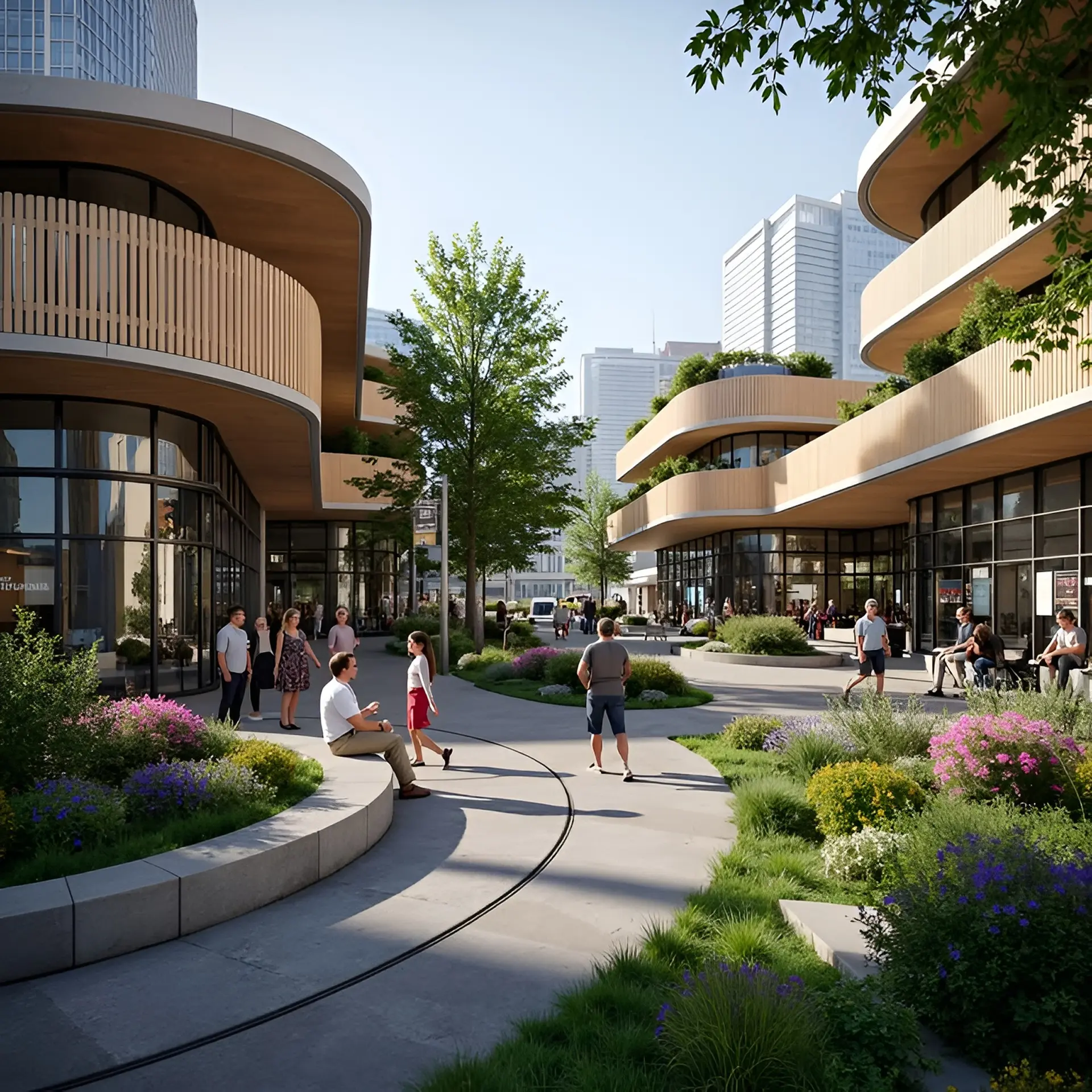
They relate to proportion, distance, enclosure, and comfort.
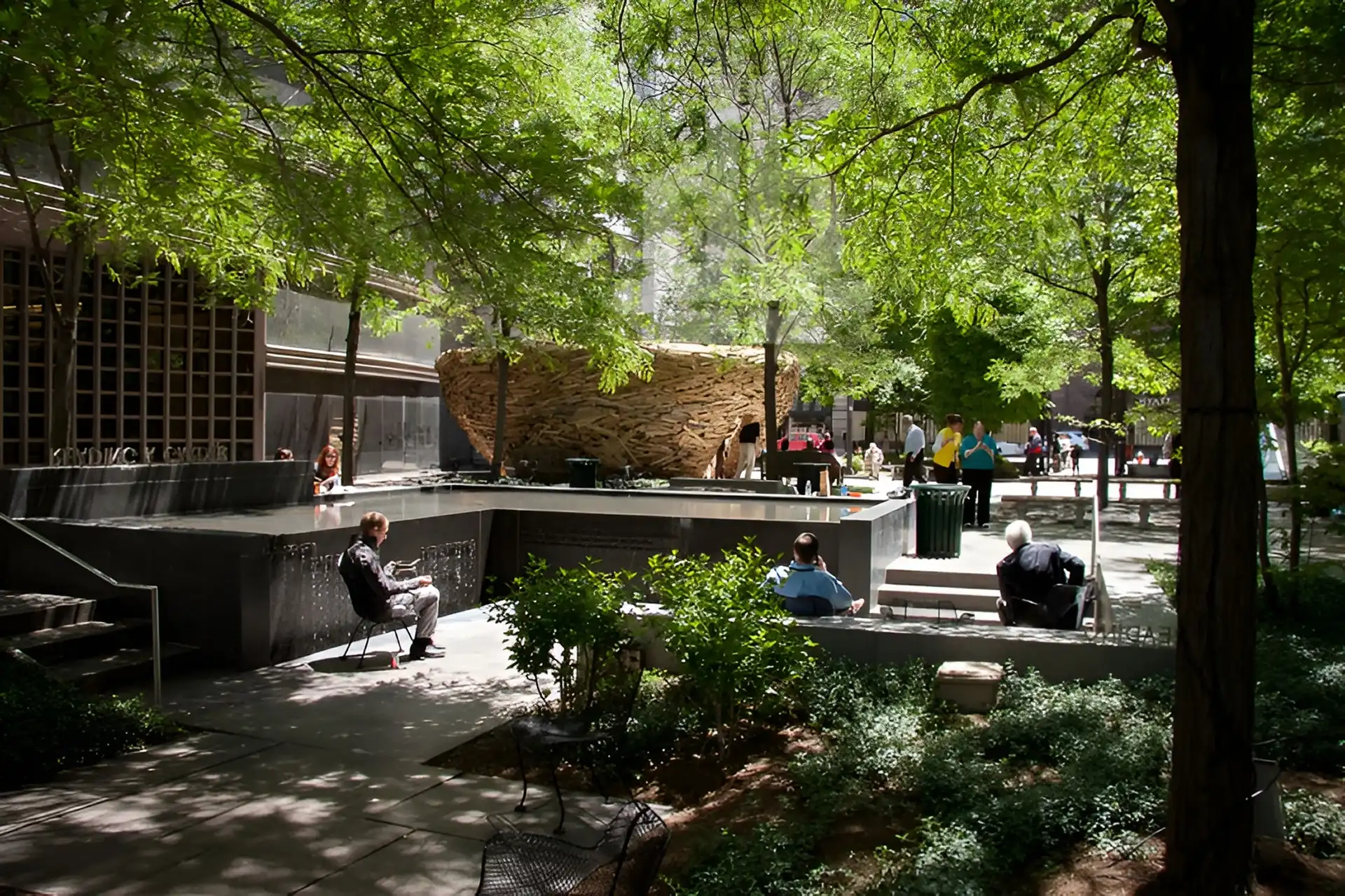
Public realms that prioritize human scale — through building edges, street widths, shading, and spatial rhythm — create environments where people naturally slow down and engage. When spaces feel comfortable, they invite staying.
When they feel oversized or exposed, they encourage leaving.
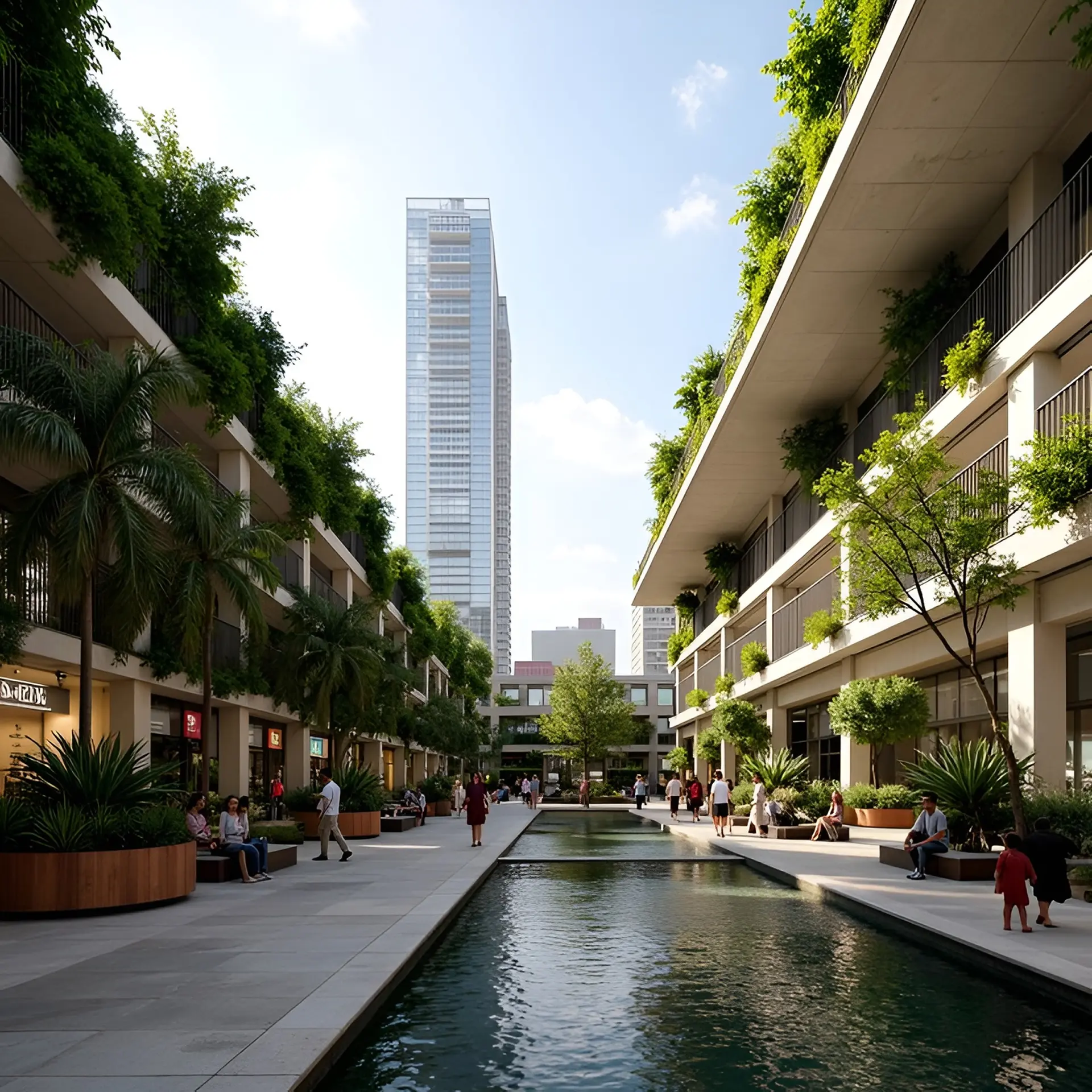
In many regions, particularly hot climates, climate is the defining factor of public realm success.
Without adequate shading, cooling strategies, and environmental design, walkability and outdoor life are severely limited.
Successful developments treat climate not as a constraint but as a design driver — integrating trees, arcades, canopies, water elements, and orientation strategies into the spatial structure of the place. [2]
Comfort determines usability. Usability determines value.
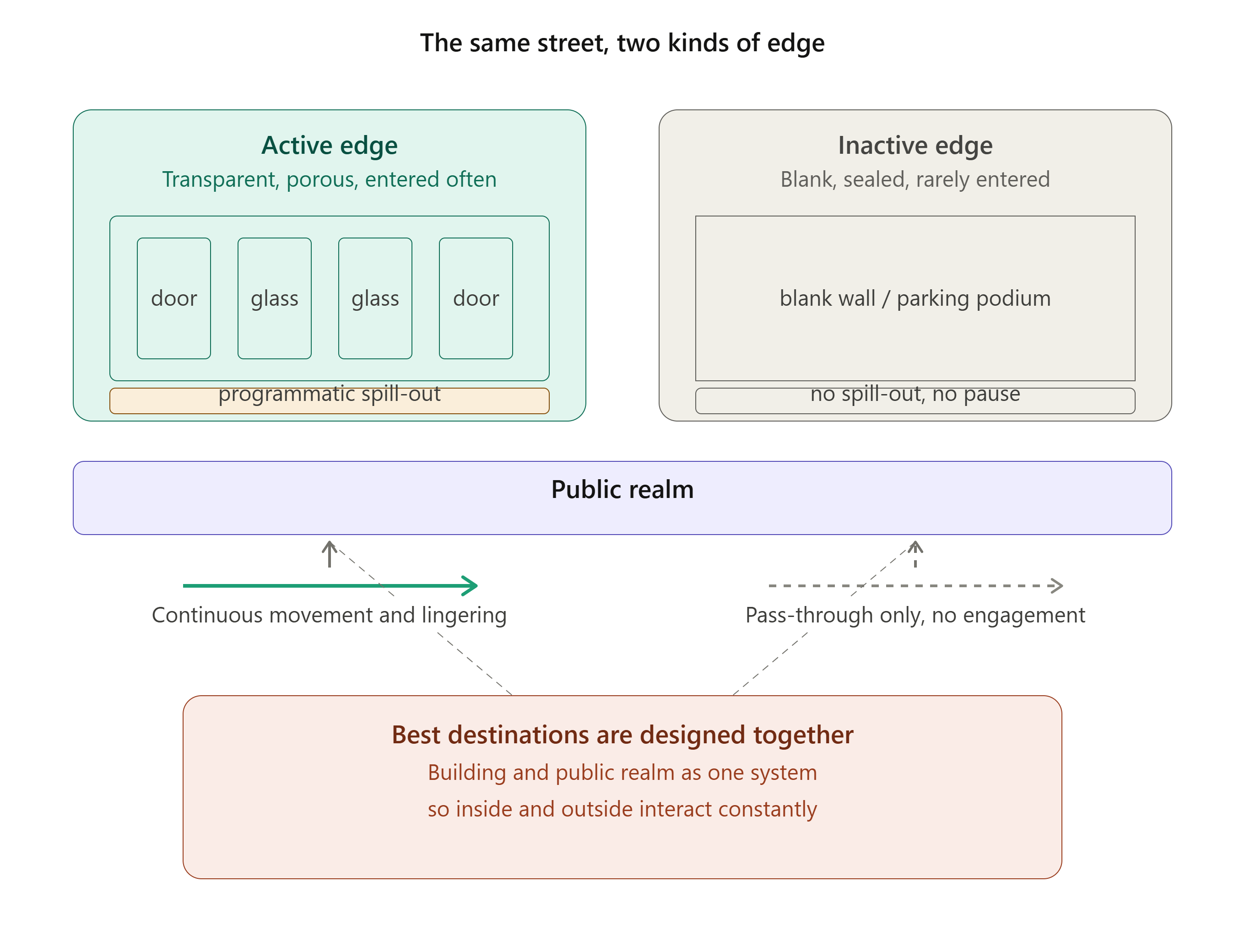
A public realm is only as strong as the edges that define it.
Ground-floor activation, transparency, entrances, and programmatic spill-out zones determine whether a space feels alive or empty.
Inactive edges create dead zones. Active edges generate continuous movement and engagement.
The most successful destinations design buildings and public realm together, ensuring that interaction between inside and outside is constant and intentional. [3]
Public realms are not static environments.
They operate across time — morning, afternoon, evening, weekday, weekend, seasonal peaks, and special events.
Spaces that support flexible use can adapt to markets, cultural programming, and shifting user behavior.
This flexibility allows a single space to perform multiple roles, increasing its value contribution to the wider development.
Strong public realms are not branded after completion.
They express identity through materiality, landscape, geometry, cultural context, and spatial sequence.
When identity is embedded rather than applied, the place becomes memorable without relying on signage or marketing. [4]
This creates long-term differentiation that is difficult to replicate.
The success of a public realm is not determined by its scale, but by the number and quality of experiences it supports.
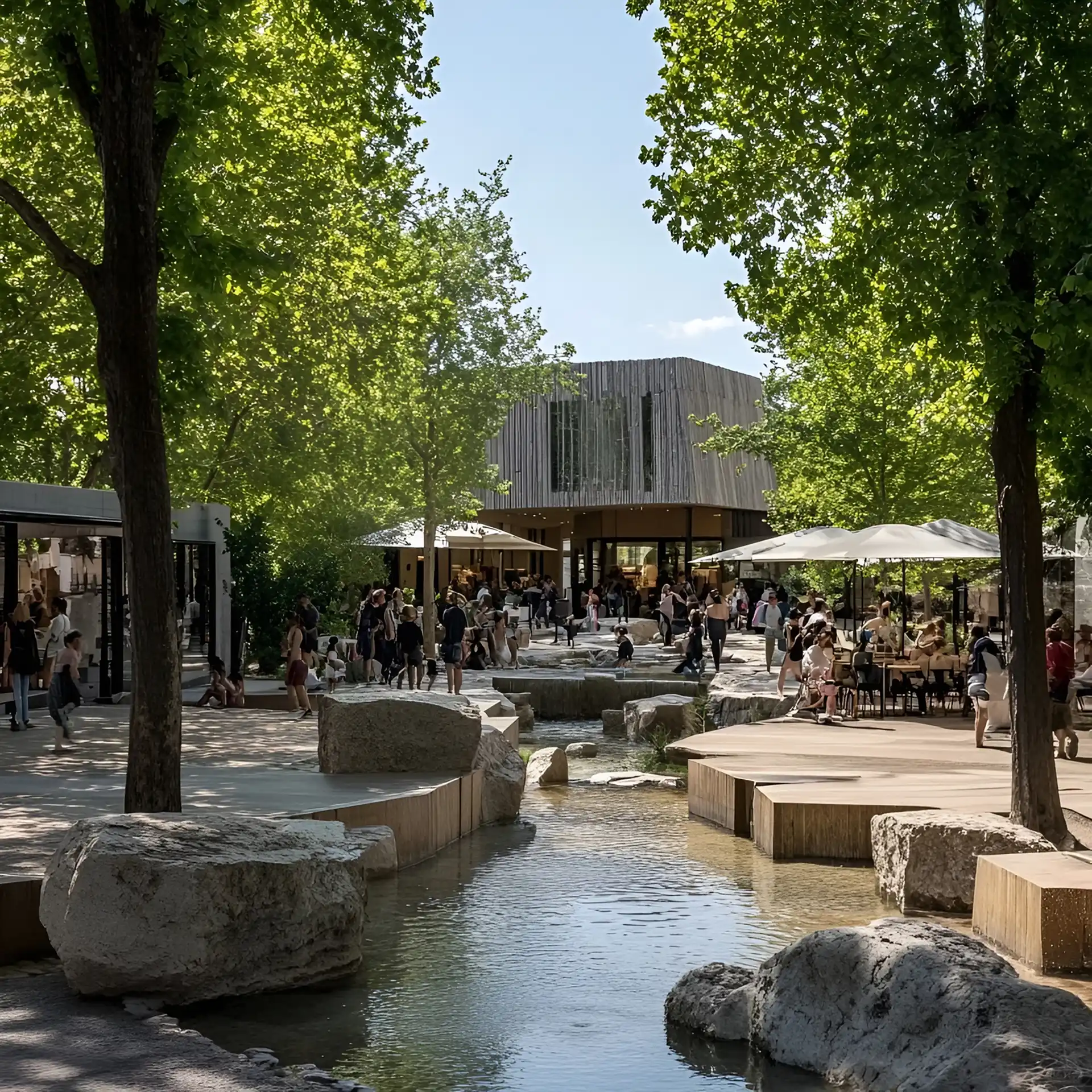
A smaller, well-designed space with cafés, seating, movement, social interaction, and visual interest will outperform a large but empty plaza.
Experience density is becoming one of the most important indicators of successful placemaking.
It reflects how much life a space can support at any moment in time.
Across global real estate markets, the public realm is undergoing a fundamental repositioning.
It is no longer treated as leftover space between assets.
It is increasingly recognized as the framework that determines whether those assets succeed.
Developments that invest in public realm as a core strategy consistently outperform those that treat it as a finishing layer.
Because in the end, people do not remember buildings in isolation.
They remember how a place made them feel while moving through it.
And that feeling is shaped, more than anything else, by the public realm. [5]