Saudi Arabia’s transformation is often described in terms of scale.
New cities, new districts, new infrastructure, and unprecedented levels of investment are reshaping the physical landscape of the Kingdom at a historic pace. But focusing only on scale misses the more important shift taking place.
The real transformation is not simply about building more.
It is about redefining what a city is for.
Under Vision 2030, Saudi Arabia is moving from a model of urban expansion to a model of experience creation — where cities are no longer measured only by their physical footprint, but by their ability to attract people, shape behavior, and generate long-term economic and social value. [1]
In this context, design is no longer a downstream discipline that responds to development.
It is becoming the framework through which entire destinations are conceived.
Traditional urban development was primarily infrastructure-led.
Roads, utilities, zoning, and buildings formed the backbone of cities, with experience emerging as a secondary outcome.
Today, that relationship is reversing.
The most successful destinations in Saudi Arabia are increasingly being designed as integrated experience systems — where mobility, public realm, hospitality, retail, culture, and residential life are planned as a continuous journey rather than separate components.
In this model, a city is not a collection of assets.
It is a sequence of experiences.
Every transition matters: arrival, movement, gathering, leisure, and return.
%2C%20Riyadh%2C%20KSA.webp)
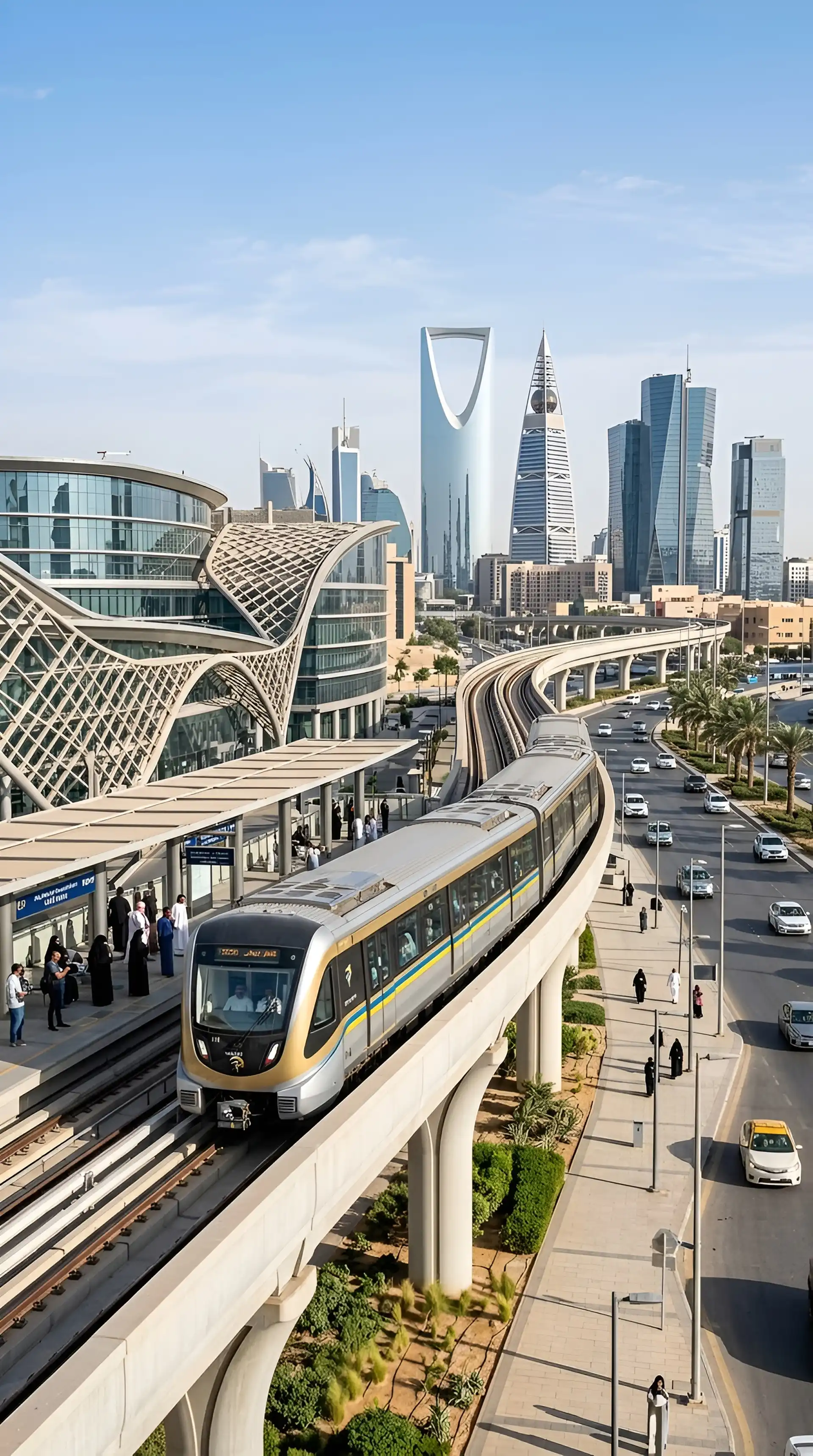
In experience-led destinations, value is not first created in buildings — it is created in the approach.
The journey into a district, the clarity of navigation, the quality of the public realm, and the transition from infrastructure to place all shape perception before a single programmatic function is encountered.
Arrival is where expectation is set.
And in many cases, it determines how the entire destination is evaluated.
Saudi Arabia’s emerging developments are increasingly treating arrival not as a logistical requirement, but as a designed moment of identity and positioning. [2]
In traditional planning, infrastructure refers to mobility networks, utilities, and servicing systems.
In experience-driven cities, the public realm becomes an equally important form of infrastructure.
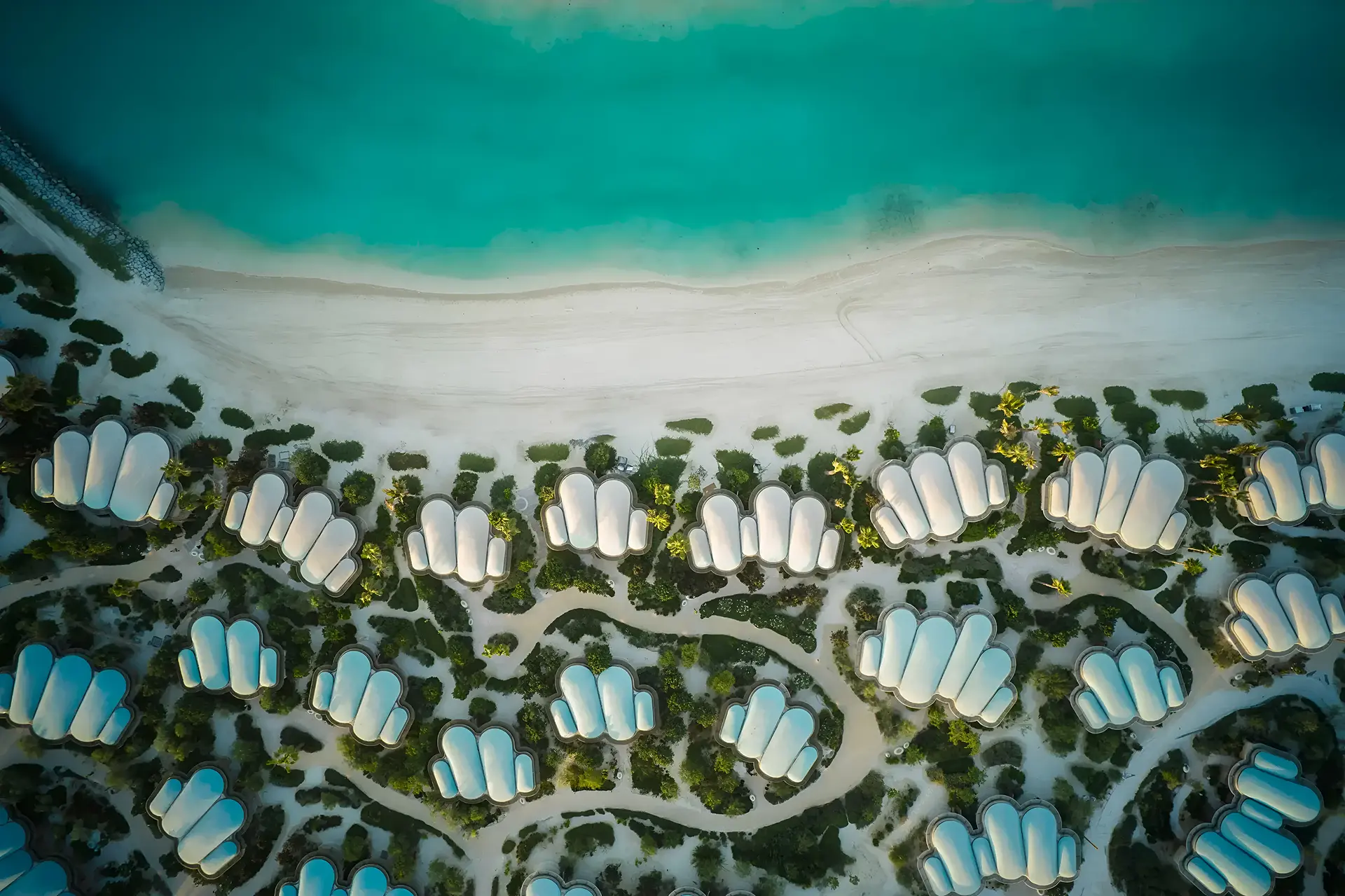
Streets, shaded walkways, plazas, waterfronts, and gathering spaces are no longer residual land uses between buildings. They are the connective system that determines whether a place feels active, walkable, and alive. [3]
The quality of this system directly impacts dwell time, engagement, and economic activity.
Put simply: people do not experience a development through its buildings — they experience it through its spaces.
Mixed-use development is often described in architectural terms.
But its real value lies in how it shapes human behavior.
The integration of living, working, leisure, hospitality, and culture creates overlapping patterns of activity that extend the life of a destination across the entire day.
Morning commuters, daytime workers, evening visitors, and weekend residents all activate the same environment in different ways. [4]
This layering of behavior is what transforms developments into destinations.
In Saudi Arabia’s future cities, mixed-use is becoming less about planning categories and more about designing continuous urban life.
One of the most significant shifts in Saudi Arabia’s development landscape is the rising influence of hospitality thinking across all asset classes.
Residents expect services, convenience, and comfort traditionally associated with hotels. Office tenants expect curated environments. Visitors expect seamless experiences. Retail environments are judged on atmosphere as much as function.
As a result, hospitality is no longer a sector.
It is a design lens applied across the built environment.
The most successful destinations will be those that understand the full user journey — not just the building envelope.
As development accelerates, differentiation becomes more difficult.
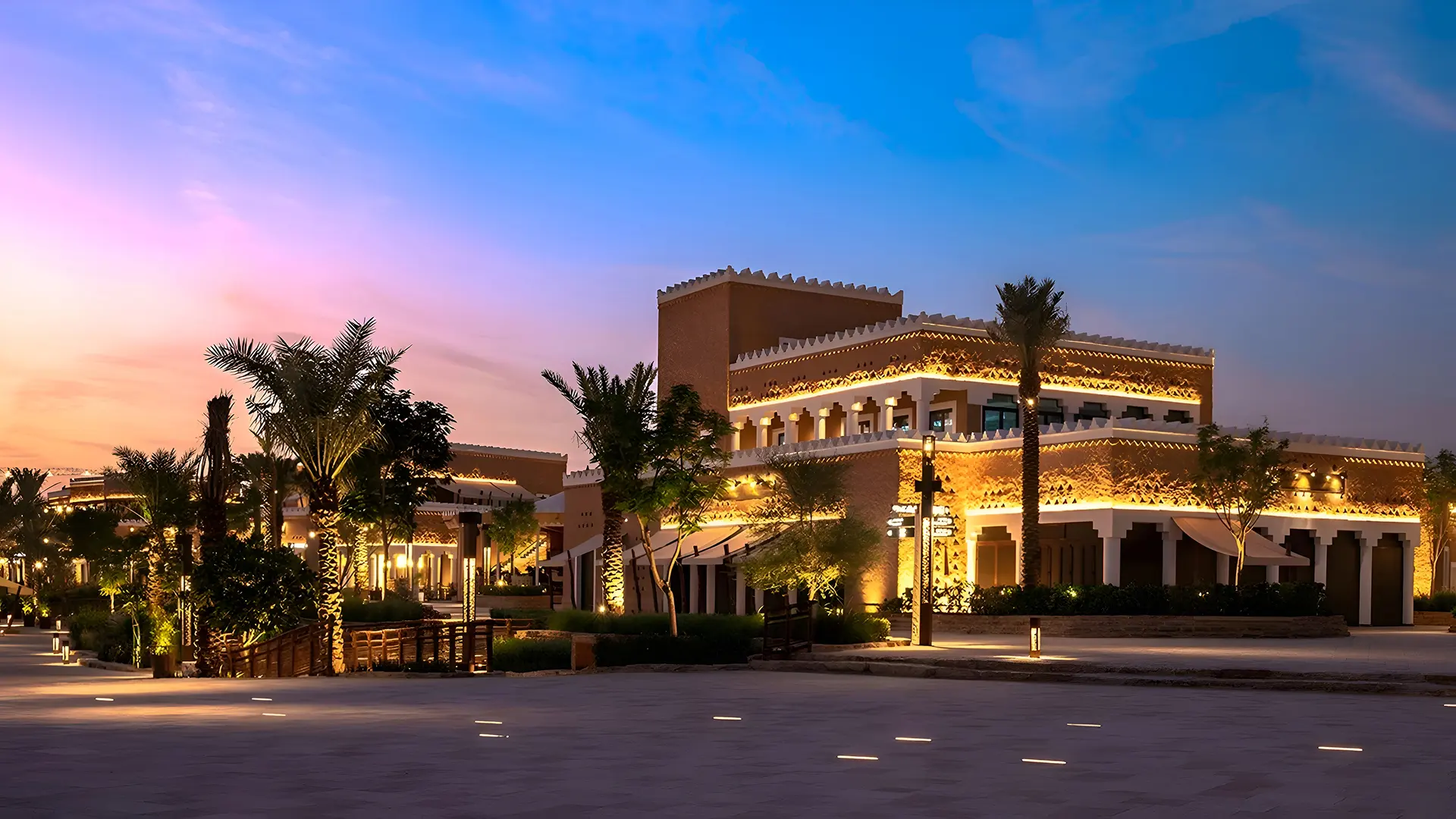
Many projects will share similar scales, programs, and technical specifications. What will distinguish successful destinations is not visual novelty, but spatial identity.
Identity is created through the relationship between architecture, landscape, culture, climate, and movement.
It is experienced through rhythm, proportion, sequence, and atmosphere — not logos or branding exercises. [5]
In this sense, identity is not applied to a place.
It is embedded within how it is experienced.
Historically, real estate value was tied to tangible metrics: location, size, and specification.
In the next phase of Saudi Arabia’s urban evolution, value will increasingly be influenced by experiential performance.
How long people stay. How often they return. How they move through space. How they feel within it. How strongly they associate a place with quality of life.
These behavioral signals are becoming indicators of long-term asset performance.
Design, therefore, is not just shaping buildings.
It is shaping outcomes.
Vision 2030 [1] has set a national framework for transformation. But its success will ultimately depend on how effectively it is translated into lived experience.
This is where design plays a critical role.
Not as decoration, and not as a final phase of development, but as the structure through which future cities are organized and understood.
Saudi Arabia’s next generation of destinations will not be defined solely by their scale or ambition.
They will be defined by how convincingly they turn vision into experience — and how consistently they make people choose to return.