
your project.

Al-Jazirah Heights
Introduction
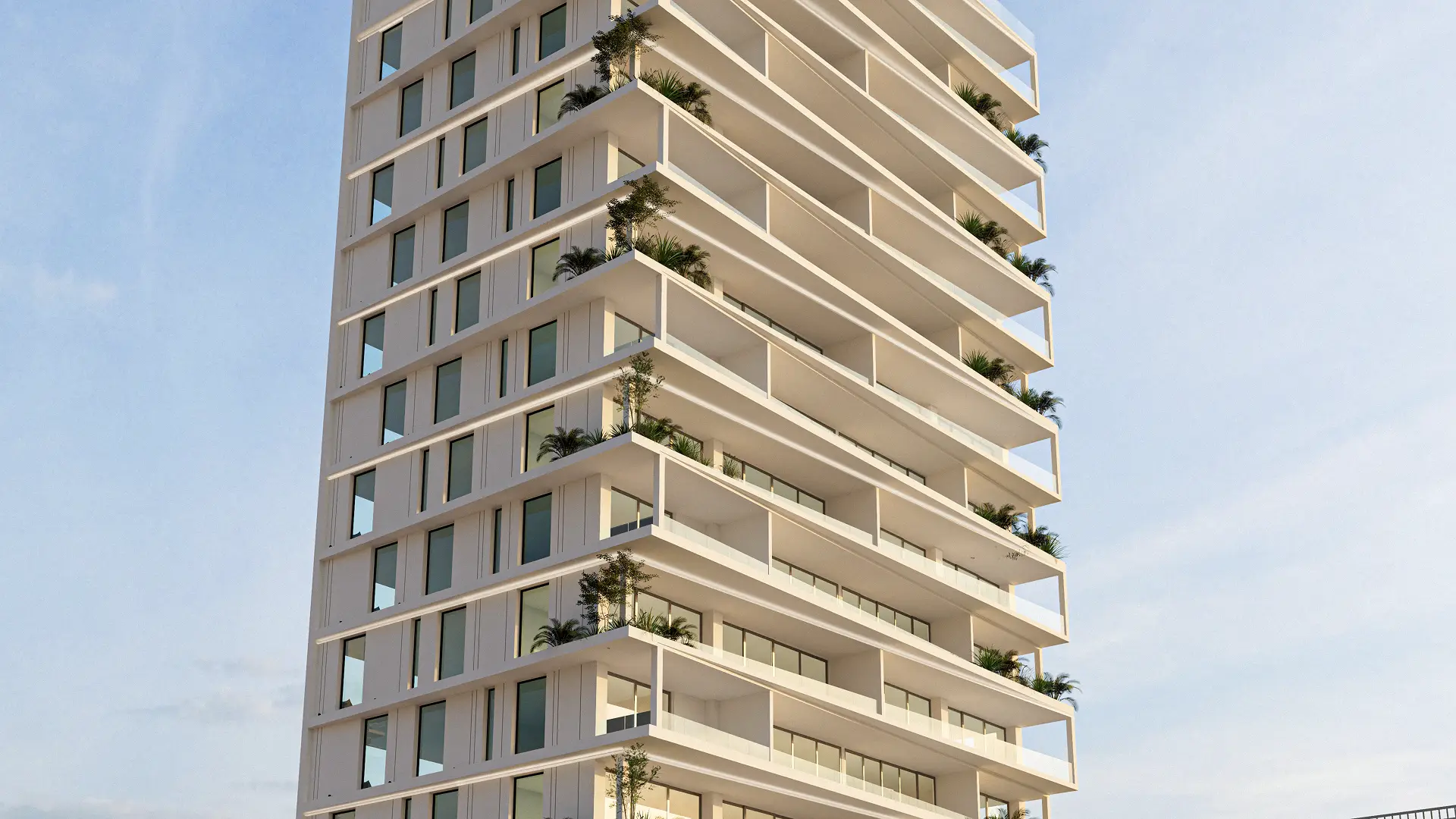
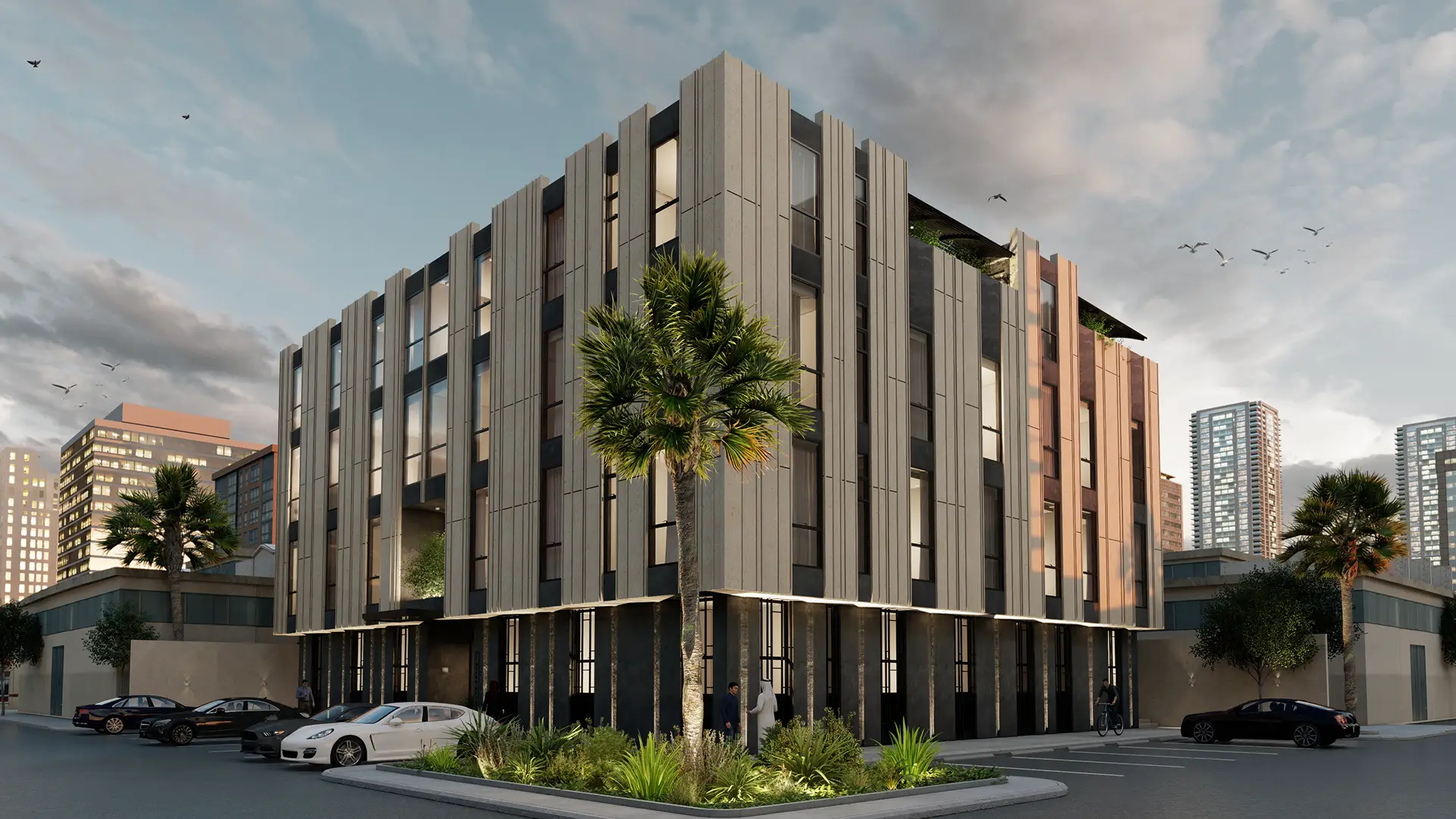
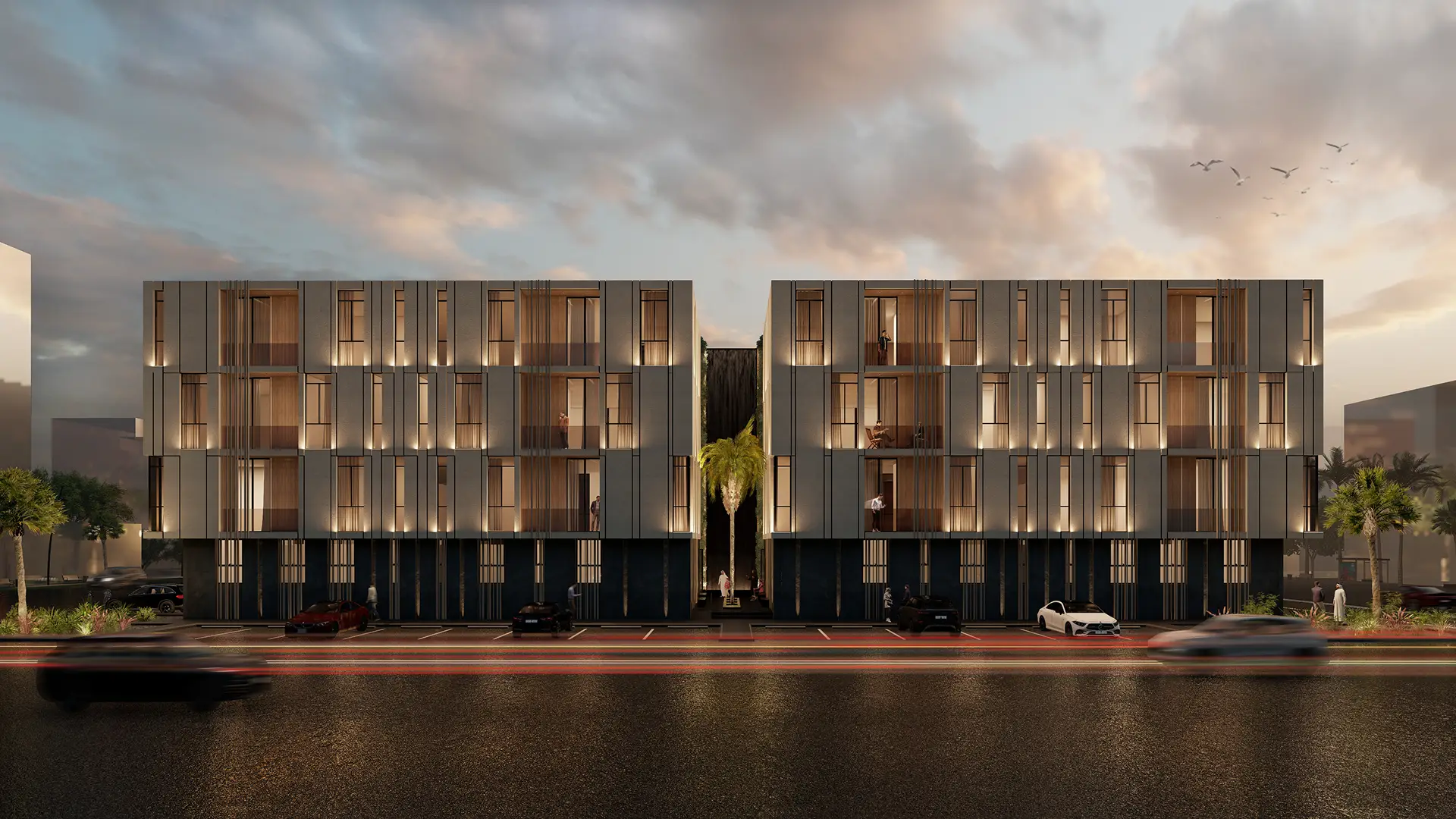
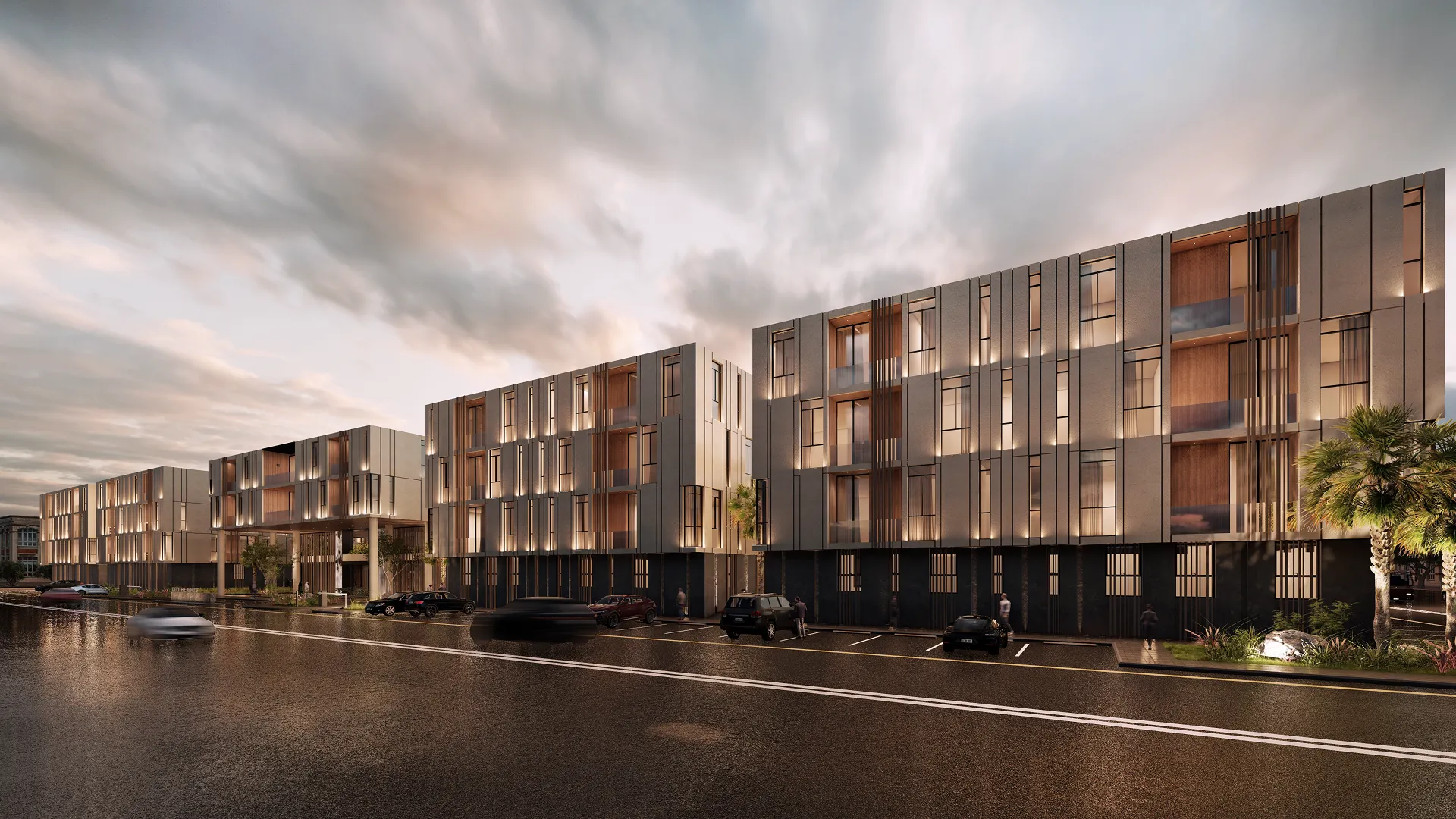
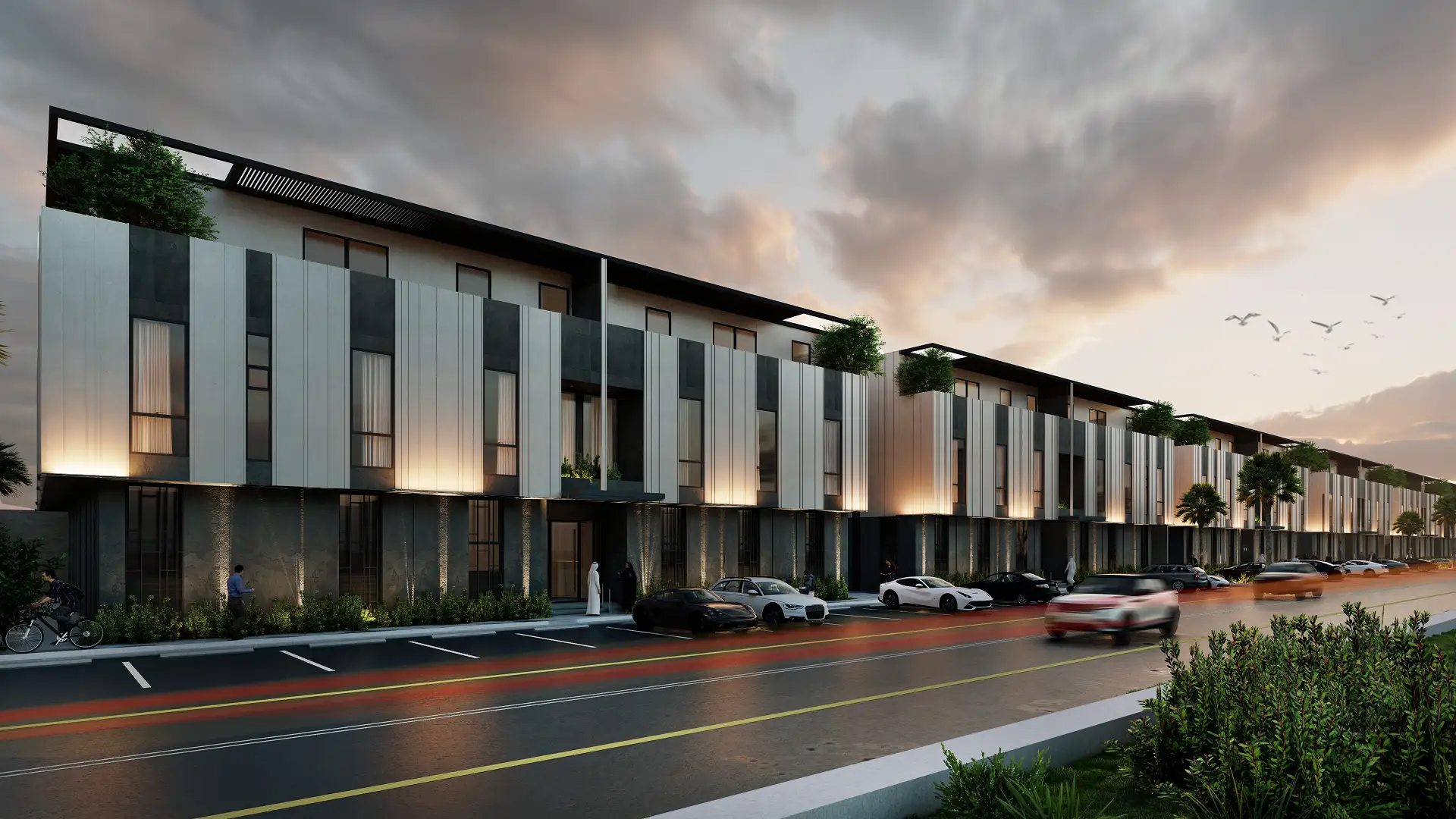
Al-Jazirah Heights is a large-scale residential development in Riyadh, shaped by a clear minimalist vision. Its facade combines cream and off-white vertical panels, dark charcoal stone at the base, and continuous linear strips creating a strong architectural rhythm. At dusk, warm light from within each unit contrasts with the dark base and slatted roofline, creating a quietly striking effect.
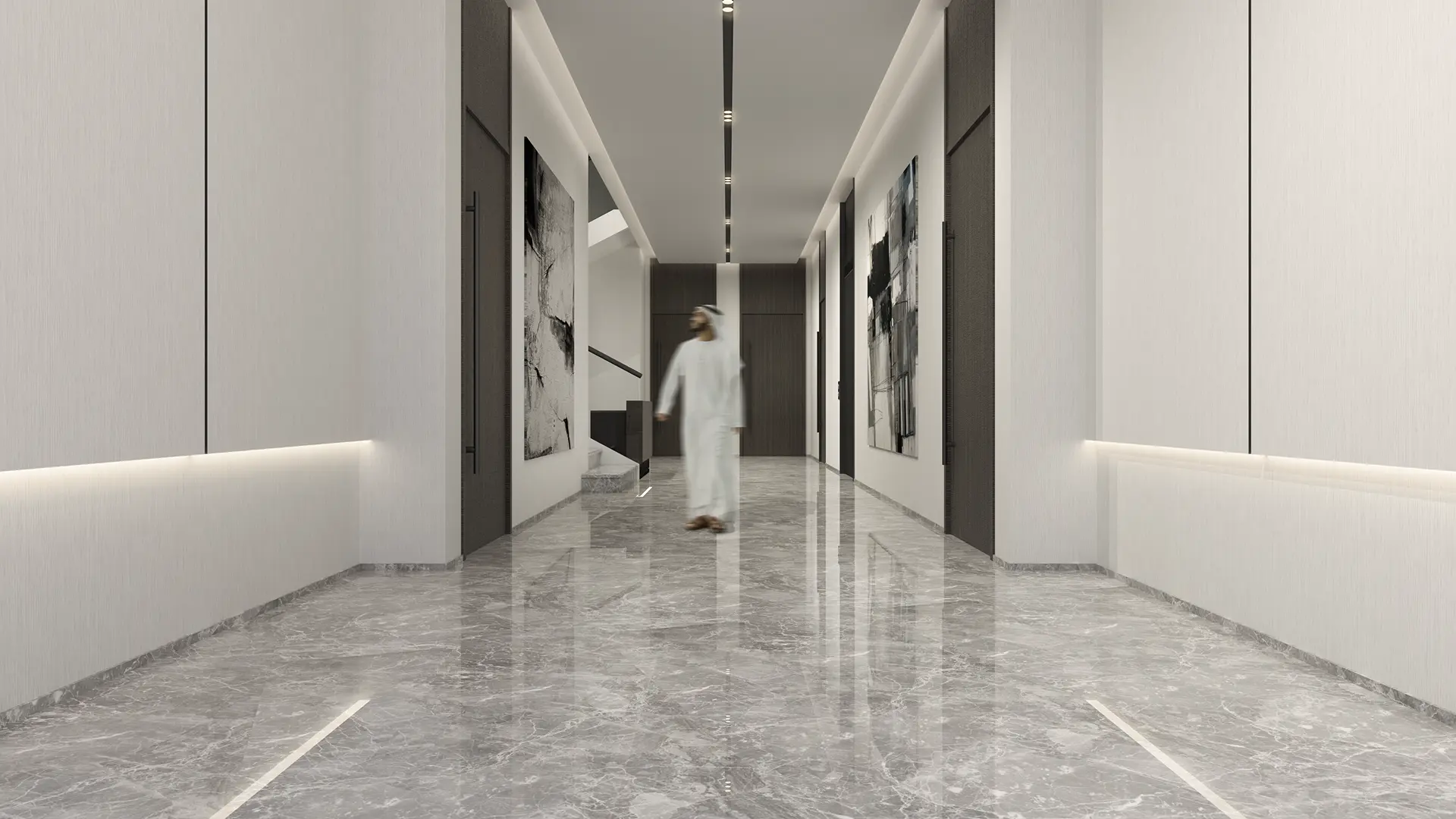
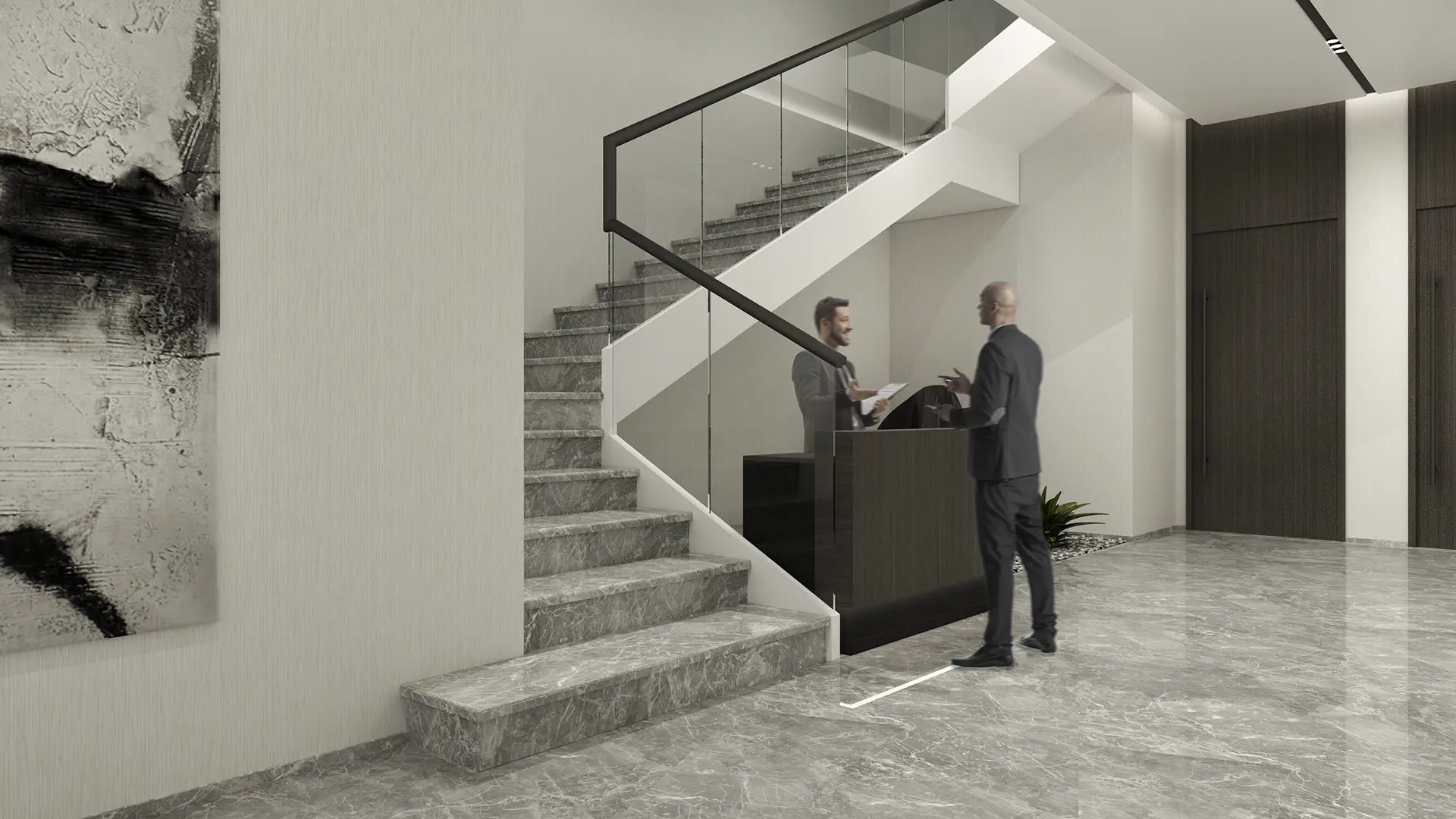
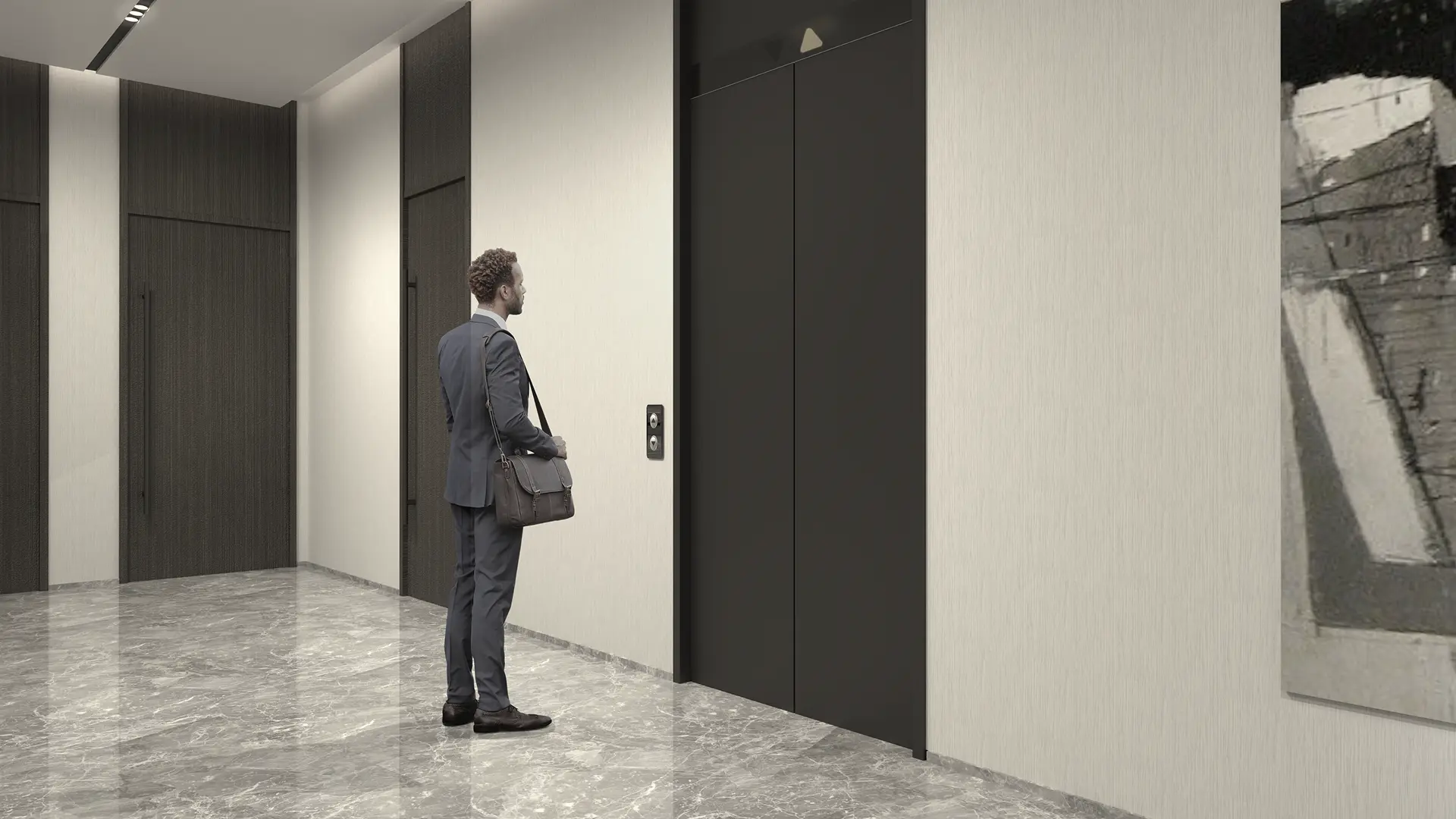
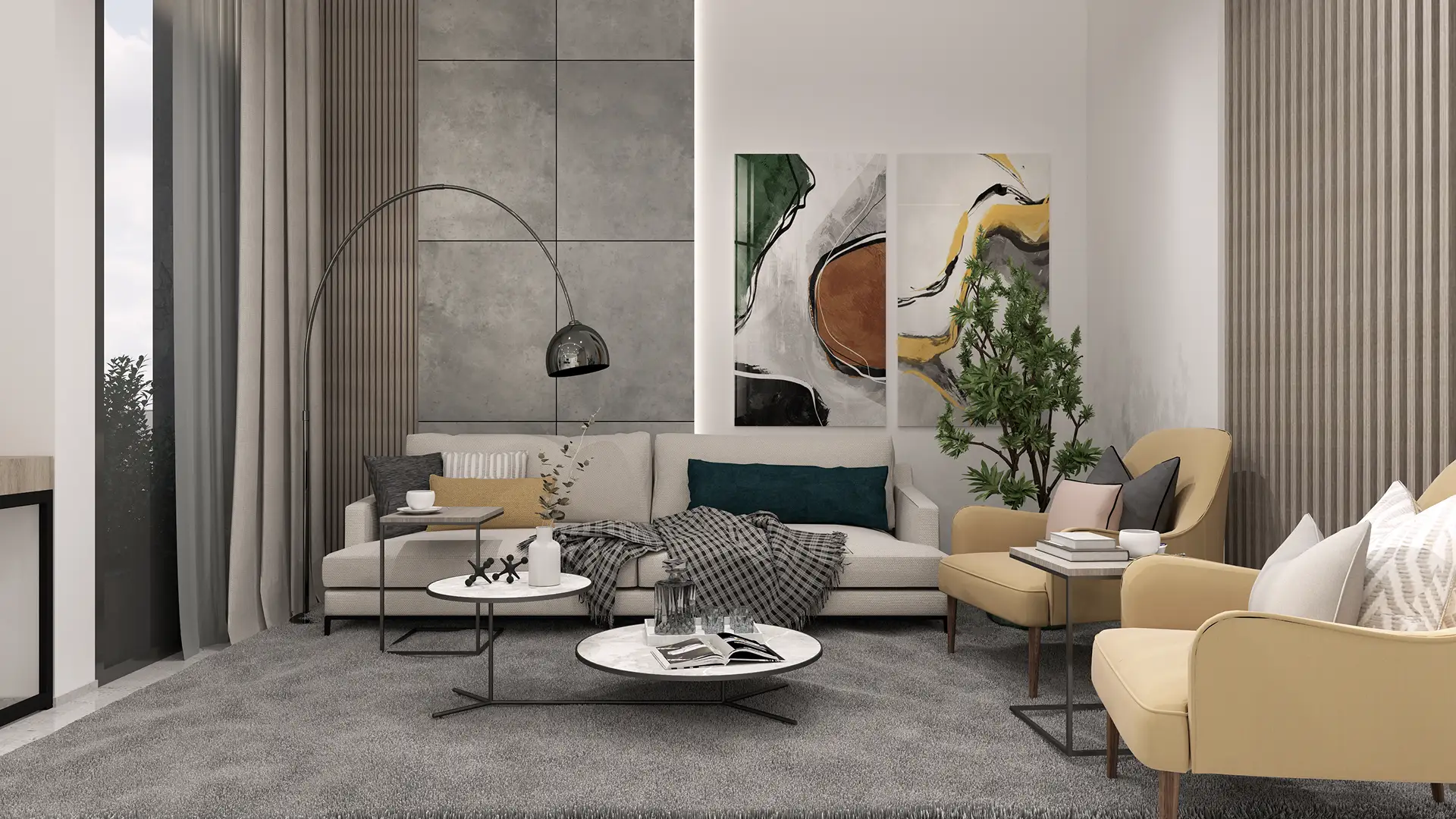
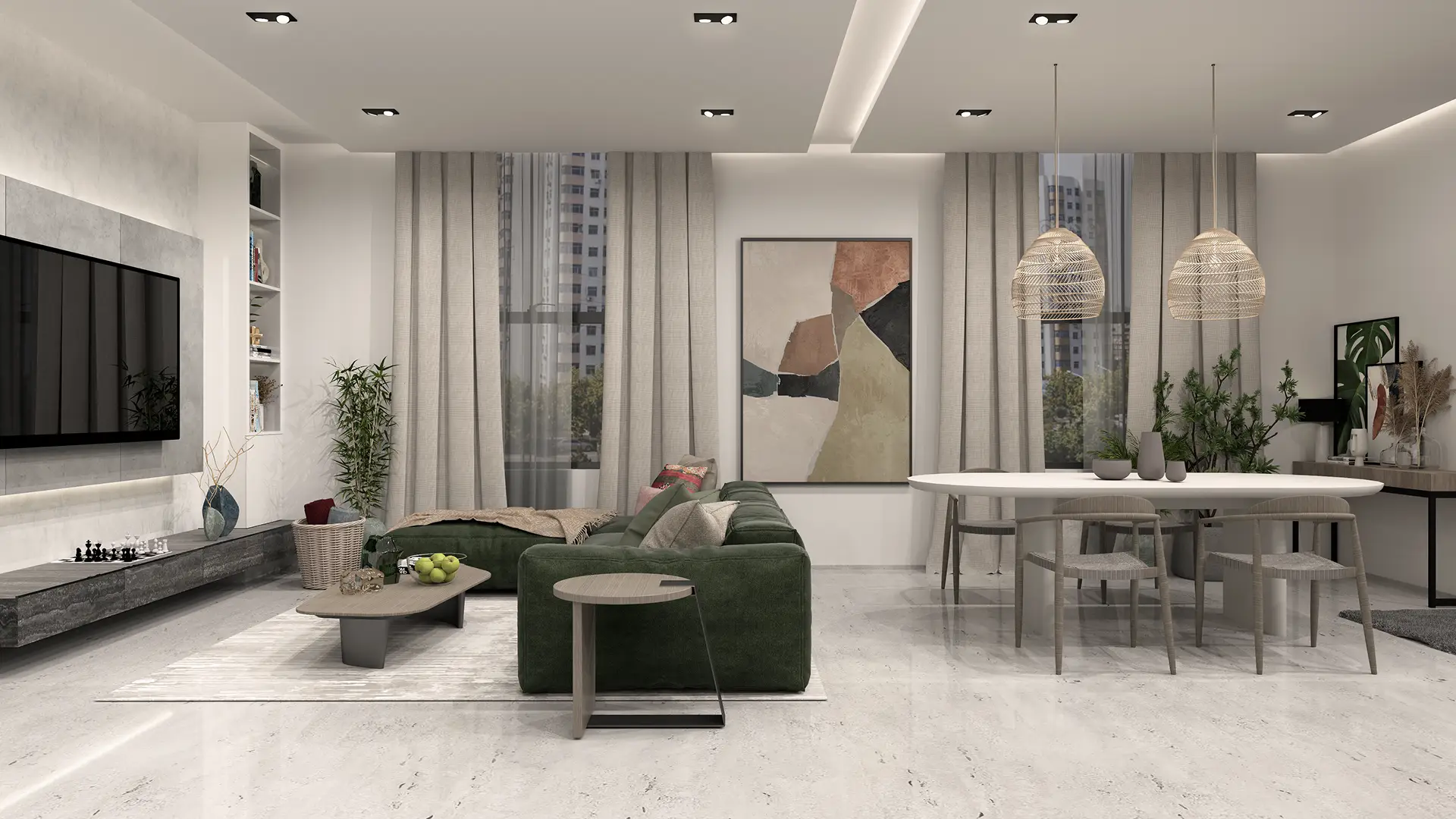
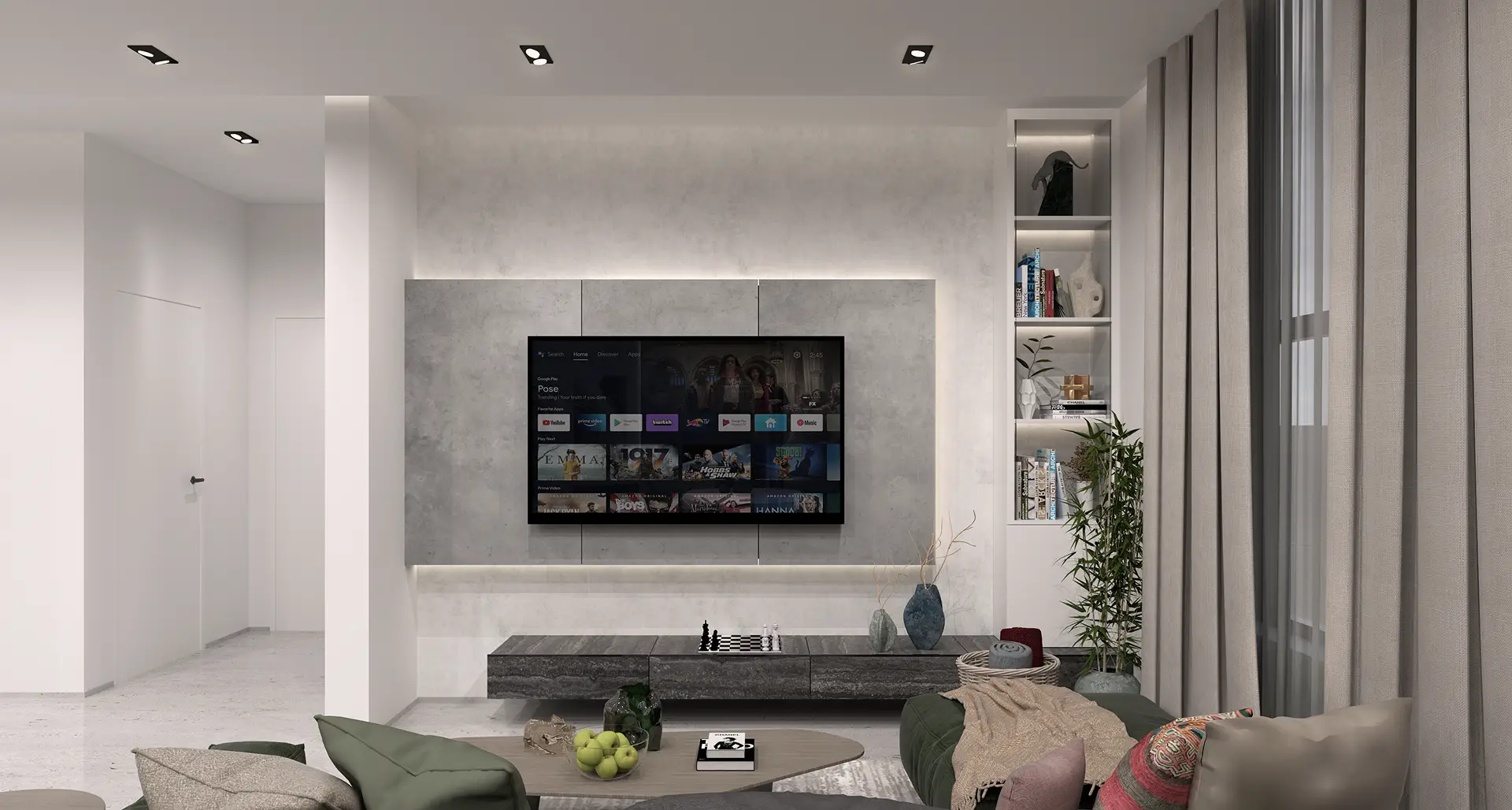
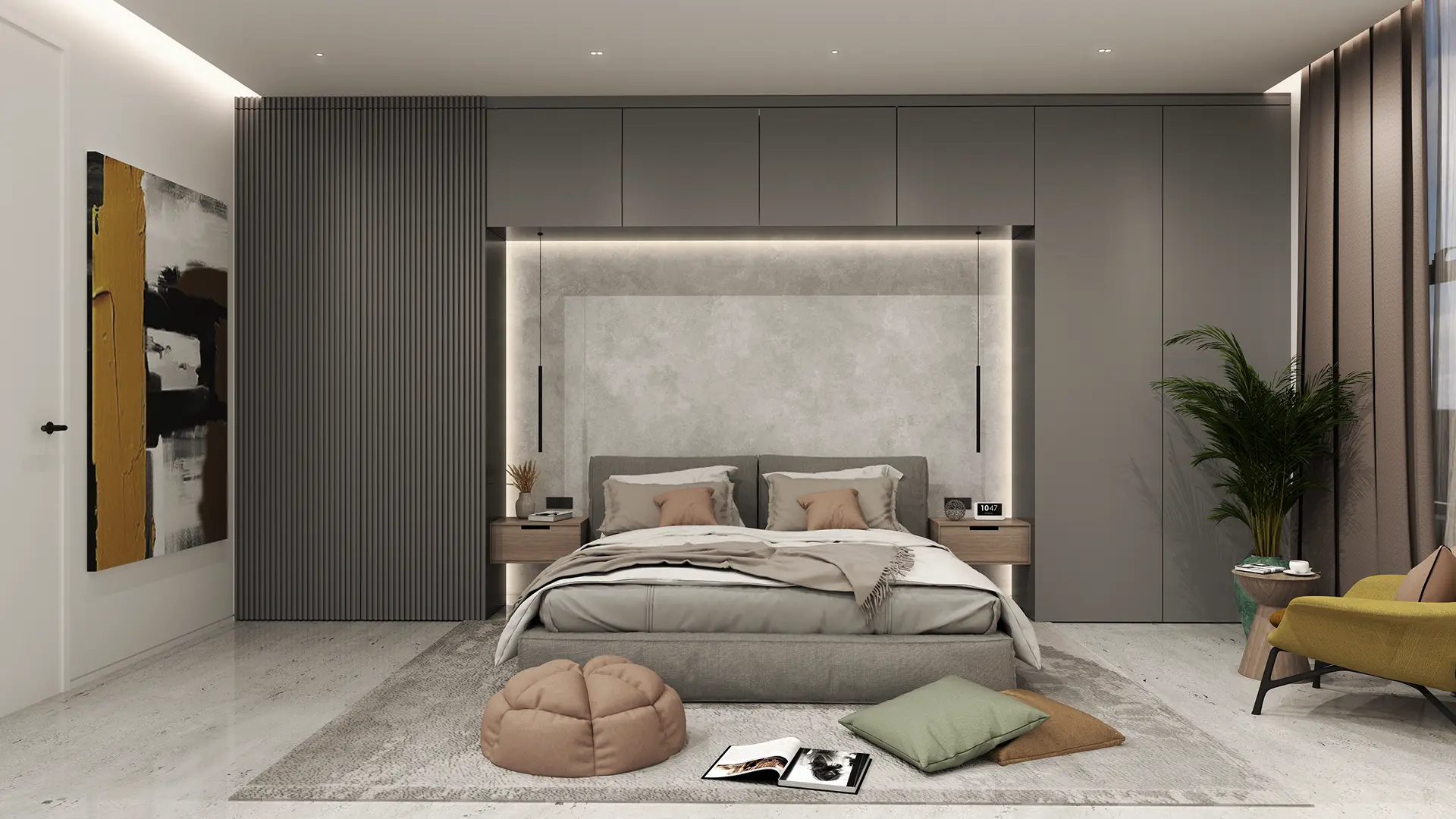
The minimalist approach that defines the exterior carries directly into the interior. Kitchens feature clean white handleless cabinetry, dark granite worktops, stone flooring, and black-framed details. Clean lines, flush detailing, and a restrained material palette continue the language of the facade, creating interiors that feel considered and cohesive with the architecture around them.
Where the Exterior Shapes the Interior
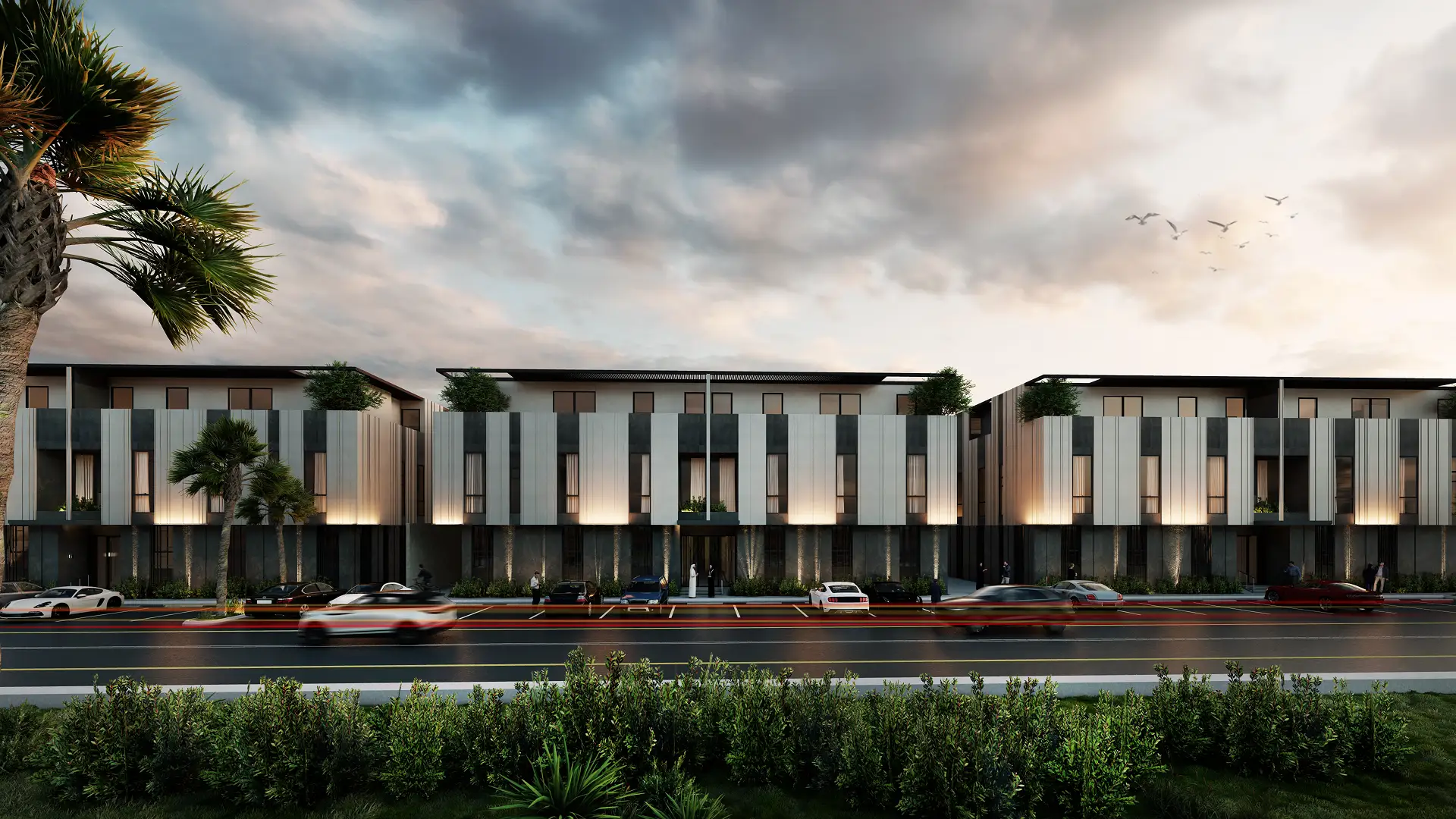
Al-Jazirah Heights presents itself to the street as a building that has been thought through completely. Its facade combines cream and off-white vertical panel cladding with linear strips running the full height of each unit, creating depth through light and shadow. Dark charcoal stone columns anchor the base, while warm uplighting highlights the planting and stonework. At the roofline, a dark slatted metal screen runs the full length of the building, softened by greenery spilling over its edge.
Inside, the same discipline continues throughout. Clean white handleless cabinetry, dark granite worktops, and light stone flooring carry the contrast of the facade inside. Black-framed details echo the exterior's linear language, while the minimalist approach continues through every room, surface, and detail, making the quality of the architecture part of the everyday experience.
Stone, Panel, and Timber — A Material Story Told at Street Level
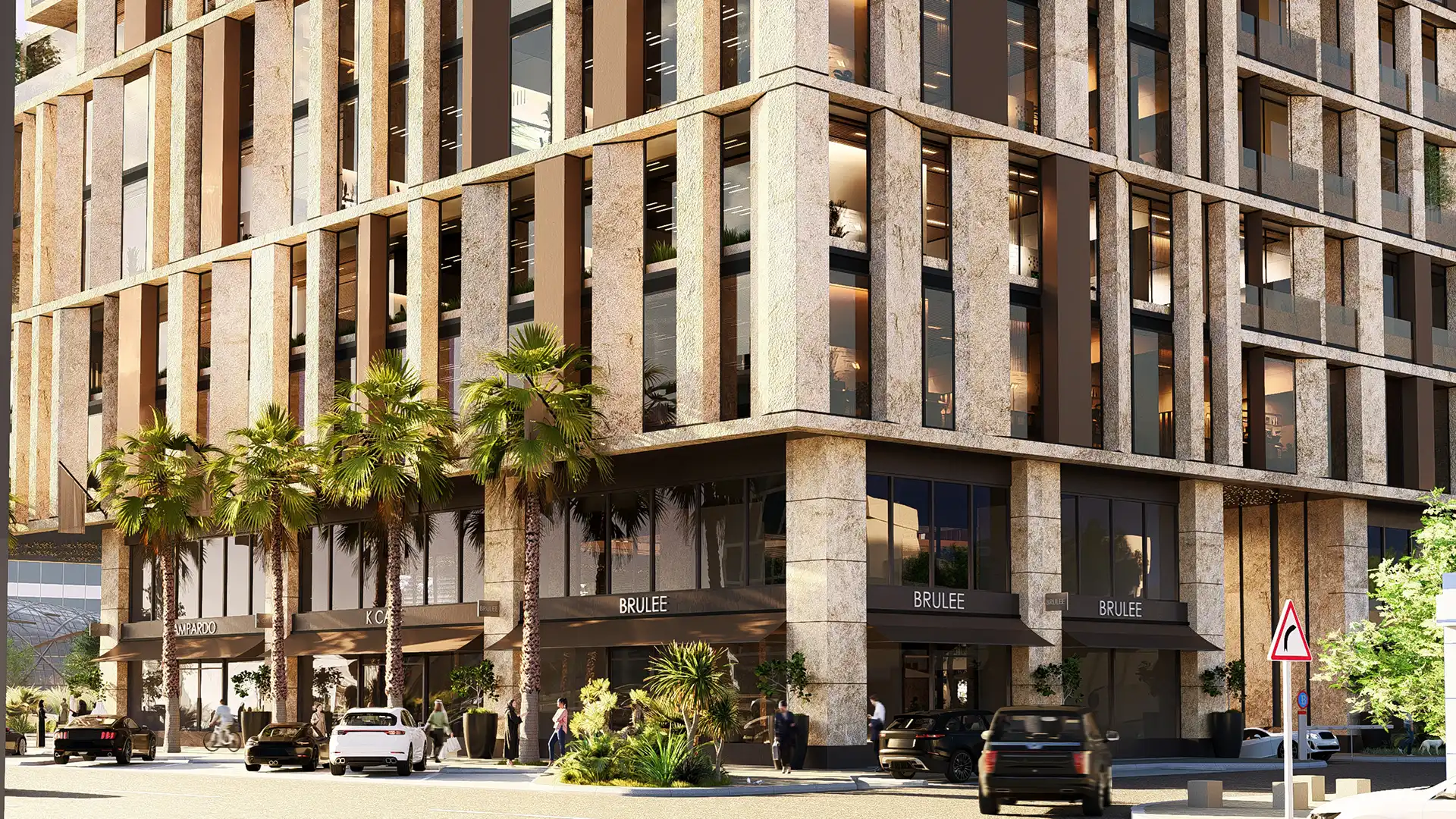
The ground level of Al-Jazirah Heights is where the material palette makes its most direct impression. Dark charcoal stone runs across the base of the frontage, anchoring the lighter cream cladding above it. The transition between the two materials is clean and deliberate, with a precise horizontal line defining the junction.
Warm timber accents appear selectively at entrance thresholds, within the slatted roofline, and across the vertical elements of the facade. Their grain and warmth introduce an organic quality to the mineral palette, with stone, panel, and timber working together in balance. Low planting runs along the street frontage, softening the stone base, while palms rise at intervals to add vertical rhythm to the facade.
Neutral by Choice, Refined by Detail
Al-Jazirah Heights commits to a palette of soft whites, warm creams, and deep charcoal — tones that read as calm and considered from the street and hold that quality throughout the day. The cream panel cladding provides a neutral backdrop, while dark charcoal stone introduces depth and weight, contrasting with the smoother panels above. Warm timber accents at thresholds and within the roofline add an organic note to the otherwise mineral palette.
The slatted elements across the facade shift in tone as the light changes, catching warm morning light differently from the cooler afternoon shade. At dusk, warm uplighting brings out the texture of the stone base and planting along the frontage, giving the building an evening character as considered as its daytime one. It is a palette that does not try to impress — it simply holds its standard in every light and at every hour.