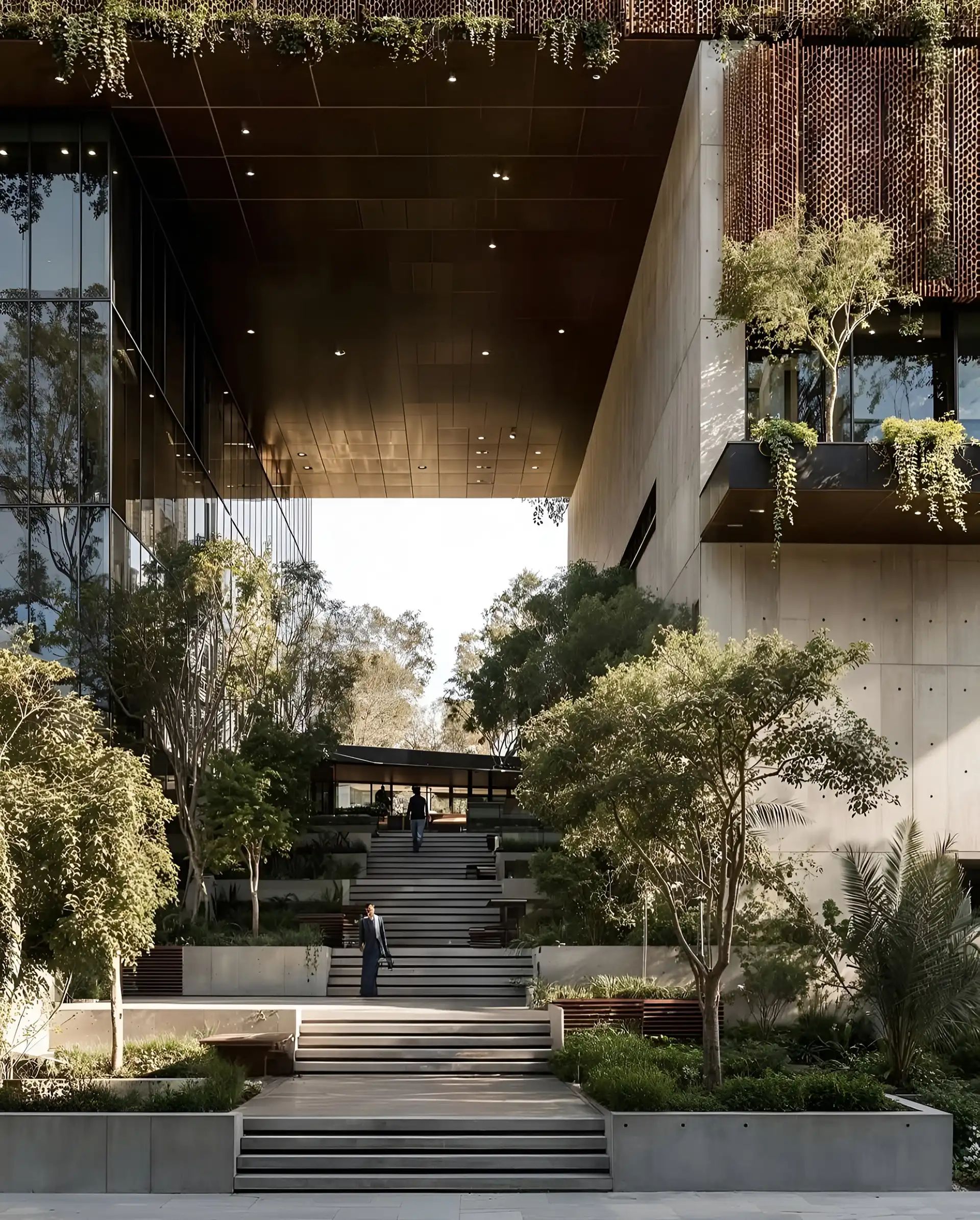
In real estate, value is often measured through occupancy rates, rental premiums, guest satisfaction, and long-term asset appreciation. Yet one of the most influential drivers of these outcomes is frequently overlooked: the arrival experience.
For mixed-use developments and hospitality assets, arrival is more than a transition between outside and inside. It is the moment when perception is formed, expectations are established, and the relationship between people and place begins. Long before a guest checks into a hotel room or a visitor explores a retail destination, they have already started evaluating the quality, credibility, and value of the asset.
This first impression has measurable consequences.
Research within the hospitality sector has demonstrated a direct relationship between design quality and business performance. Design attributes such as navigability, spatial character, aesthetics, and integration with the surrounding environment have been shown to positively influence occupancy, average daily rates (ADR), and revenue per available room (RevPAR). In other words, design quality is not merely an aesthetic consideration—it is a performance driver.
People form impressions remarkably quickly. In the built environment, these impressions are shaped through a combination of visual, spatial, and sensory cues. Architecture, landscape, lighting, materials, scale, and circulation collectively communicate what users can expect from a place.
For hospitality assets, the arrival sequence often begins before guests even enter the building. The approach road, drop-off zone, signage, landscaping, entrance façade, and lobby experience work together to establish a sense of quality and trust. Studies examining hotel guest behavior have found that lobbies play a critical role in creating first impressions and influencing booking intentions. Design choices within these spaces affect emotional responses, perceived value, and ultimately consumer decisions.
The same principle extends beyond hospitality. In mixed-use developments, arrival spaces influence how tenants, visitors, residents, and investors perceive the entire destination. A welldesigned arrival sequence signals professionalism, quality, and attention to detail. A poorly considered one can diminish the perceived value of even the most technically successful development. [1]
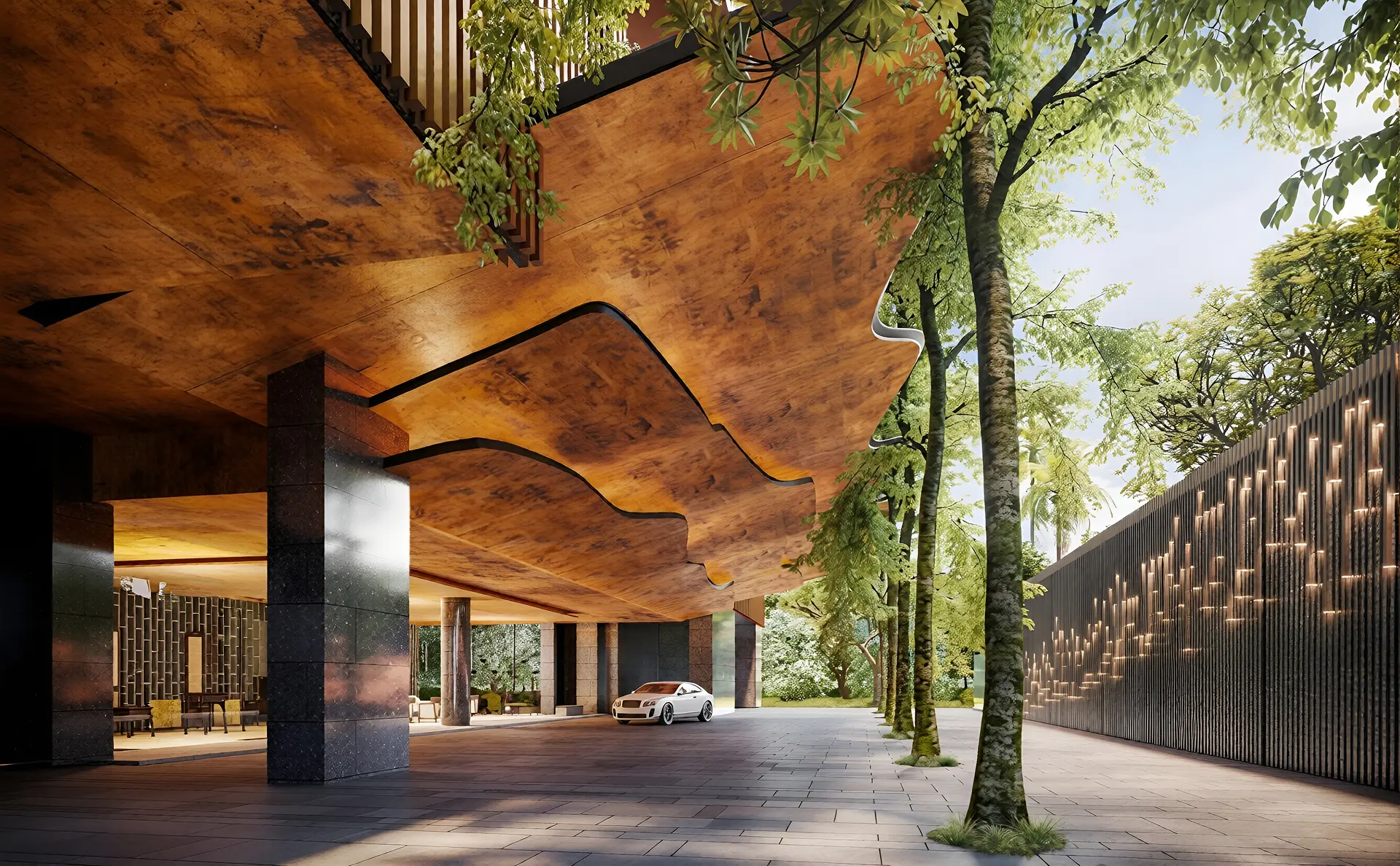
Developers often focus investment on highly visible amenities, premium finishes, or signature architectural features. While these elements contribute to an asset's identity, their impact can be limited if the arrival experience fails to establish a strong foundation.
The most successful destinations understand that arrival is not a single moment. It is a carefully orchestrated journey.
A guest arriving at a hospitality property should intuitively understand where to go, how to move through the space, and what kind of experience awaits them. Similarly, visitors approaching a mixed-use destination should feel welcomed, oriented, and connected from the outset.
Research has shown that coherent layouts, effective wayfinding, and strong visual character contribute positively to property performance. When people can easily navigate a space and form positive emotional connections with it, the result is greater satisfaction and stronger commercial outcomes.
For asset owners, this translates into tangible value:
Arrival, therefore, becomes an investment in long-term asset performance rather than a discretionary design feature.
One of the most powerful aspects of arrival is its influence on memory.
Hospitality research consistently highlights the importance of the physical environment in shaping emotional responses and behavioral intentions. The quality of the environment affects not only how people experience a place but also whether they choose to return and recommend it to others.
This is particularly relevant in today's experience-driven economy, where destinations compete not only in terms of function but also on memorability.
Natural elements, thoughtful materiality, daylight, and a strong sense of place can transform arrival spaces from transactional zones into meaningful experiences. Studies examining biophilic design in hospitality environments have found positive relationships between high-quality environmental design, guest well-being, perceived value, and willingness to revisit or pay a premium. [3]
For developers, the implication is clear: memorable arrival experiences create emotional value, and emotional value strengthens commercial value.
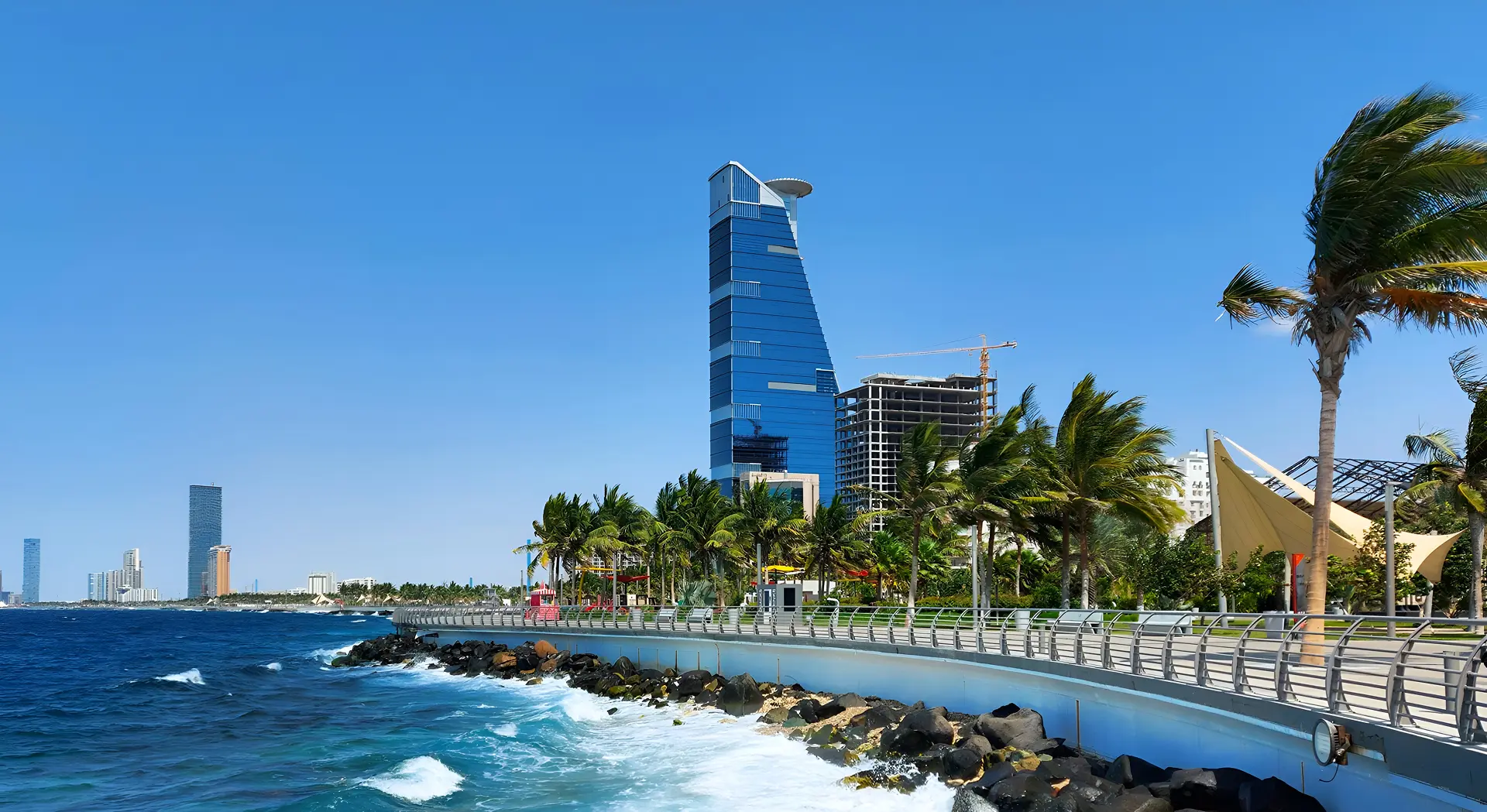
As cities continue to densify and markets become increasingly competitive, differentiation is becoming more difficult to achieve. Amenities can be replicated. Technologies evolve rapidly. Operational strategies change.
What remains remarkably difficult to replicate is a meaningful sense of arrival.
The most successful hospitality and mixed-use assets do not simply accommodate movement; they shape perception. They create confidence before a transaction occurs. They communicate quality before a service is delivered. They establish identity before a brand message is spoken. [4]
In this context, arrival is not the beginning of the experience. It is part of the asset itself.
For developers, property owners, and investors seeking long-term value creation, the lesson is simple: first impressions are not superficial. They are strategic.
When thoughtfully designed, arrival spaces do more than welcome people. They influence how an asset is perceived, experienced, remembered, and ultimately valued for years to come.