
your project.

Al-Qirawan Resort
Introduction
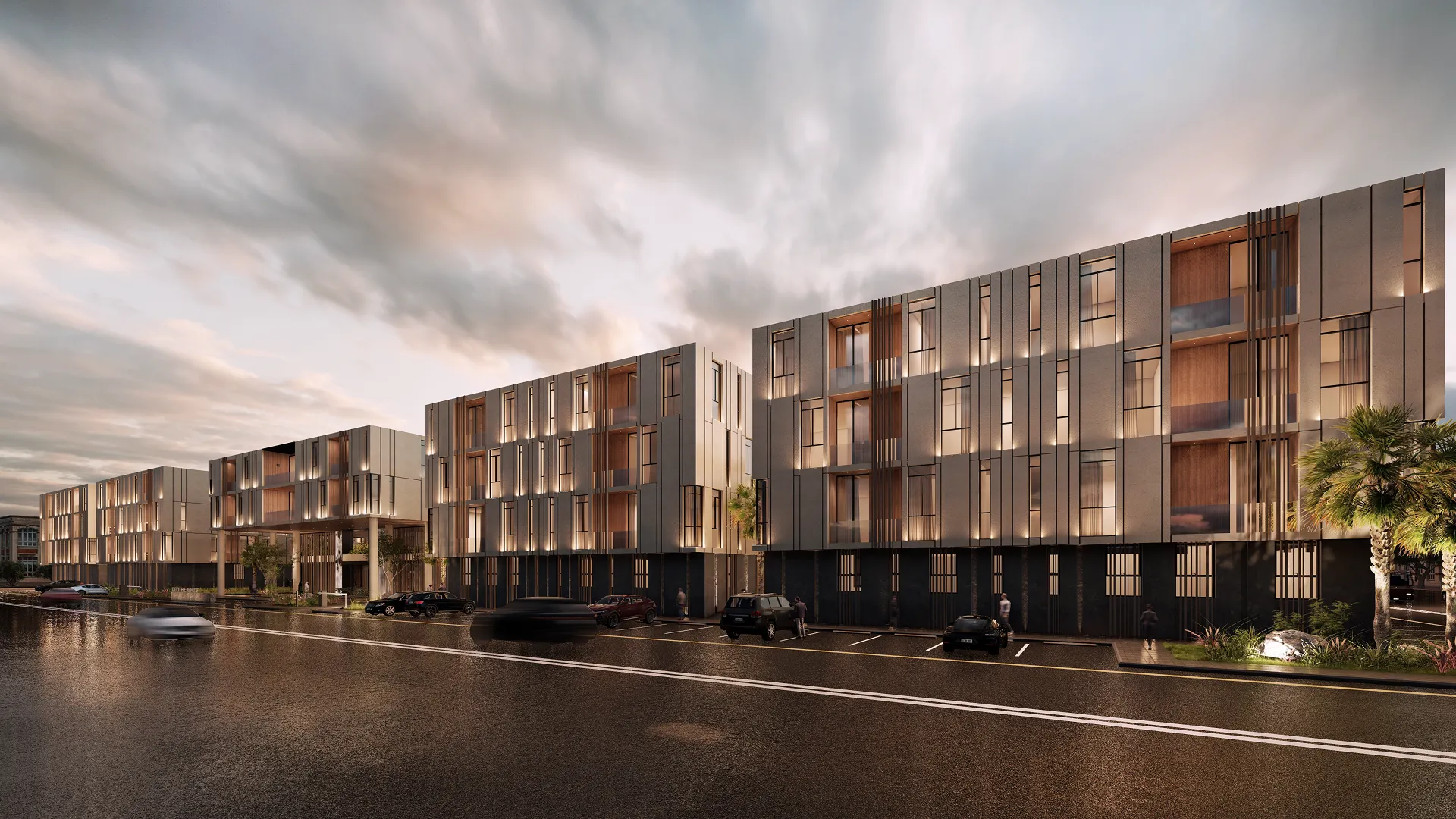
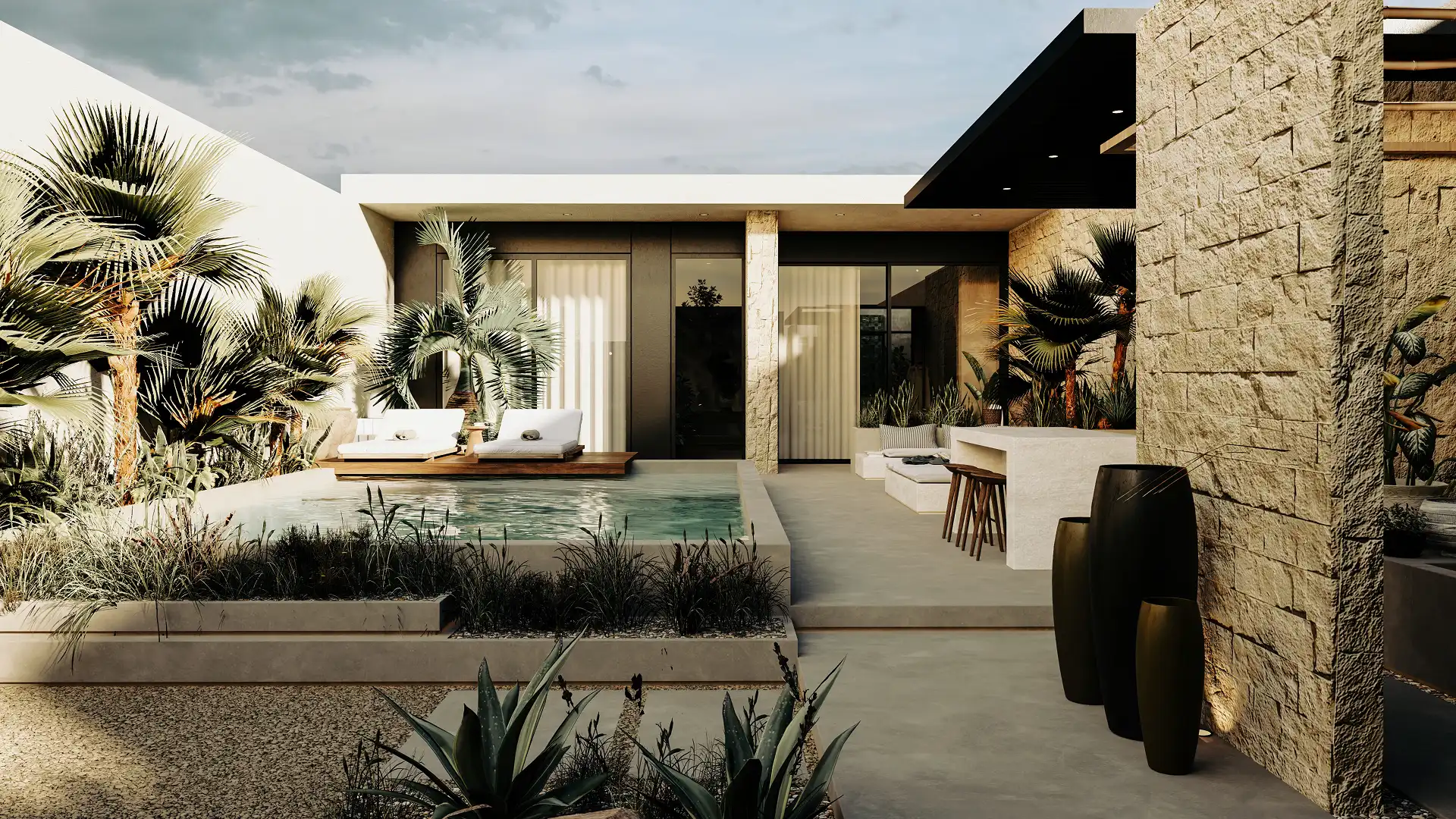
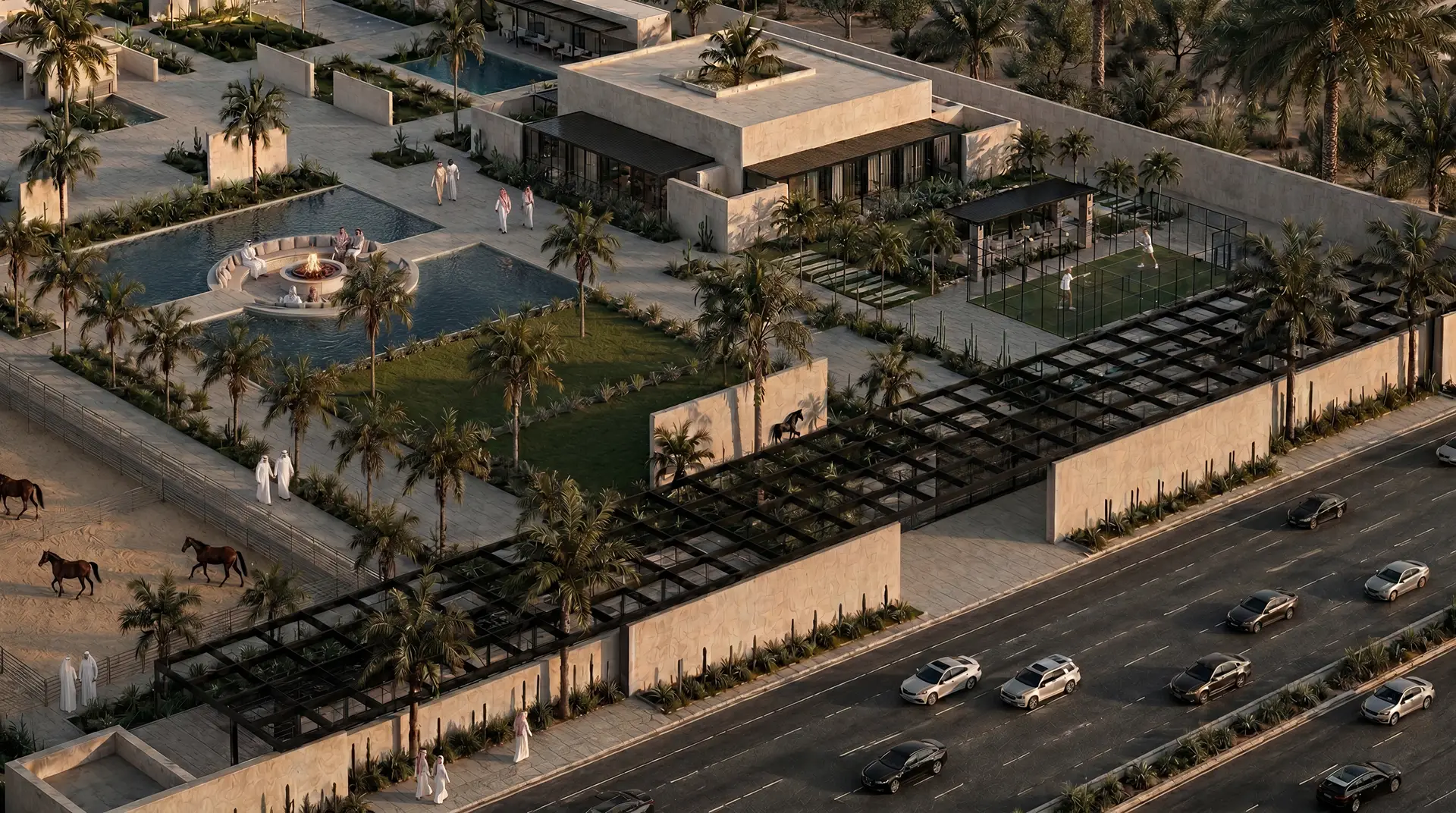
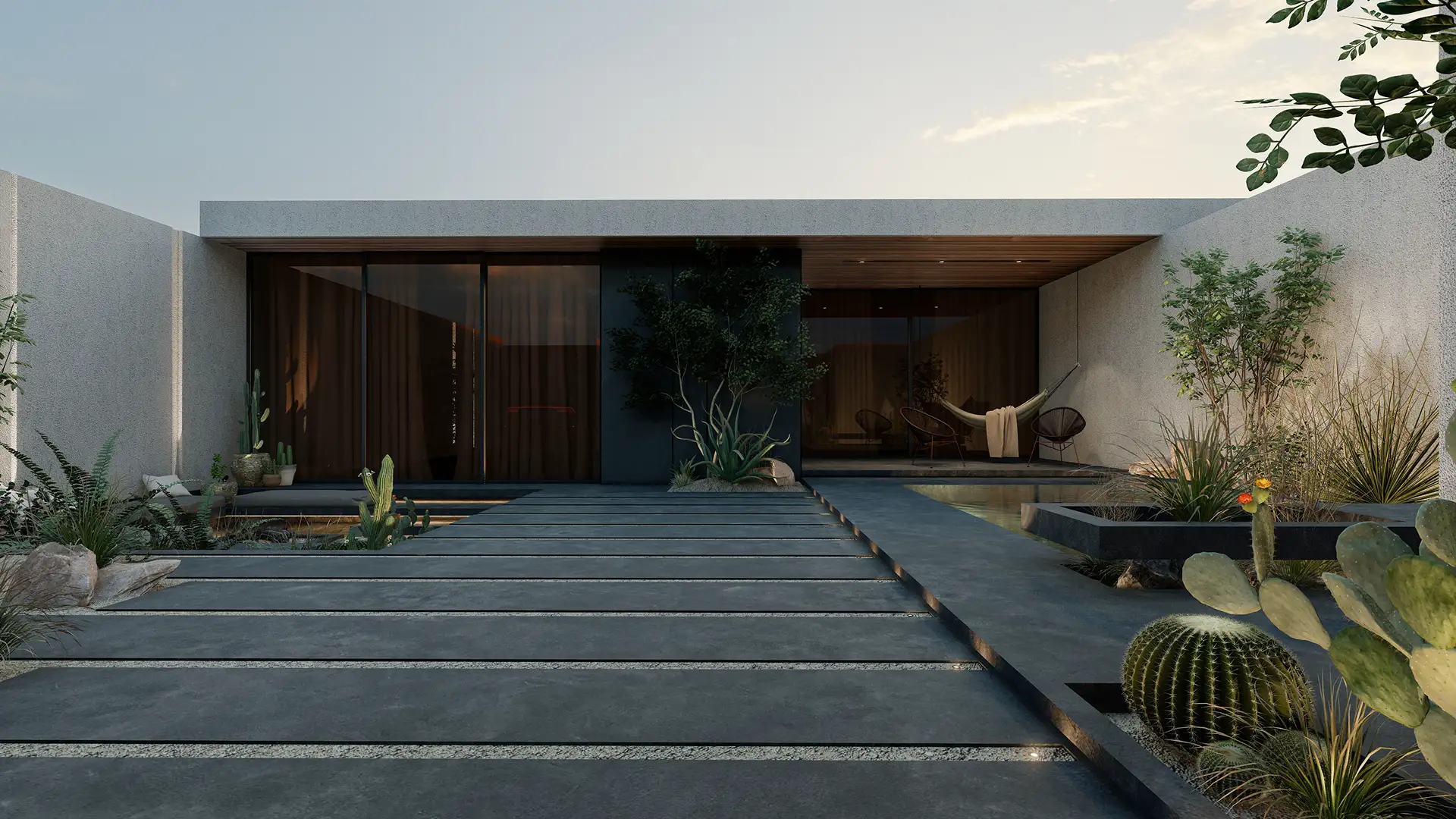
Al-Qirawan is a resort of four units, each with its own layout and character, yet all shaped by the same material conviction: raw and refined can occupy the same space. The exterior combines dark basalt paving, local natural stone, and a flat concrete profile that sits quietly against its setting.
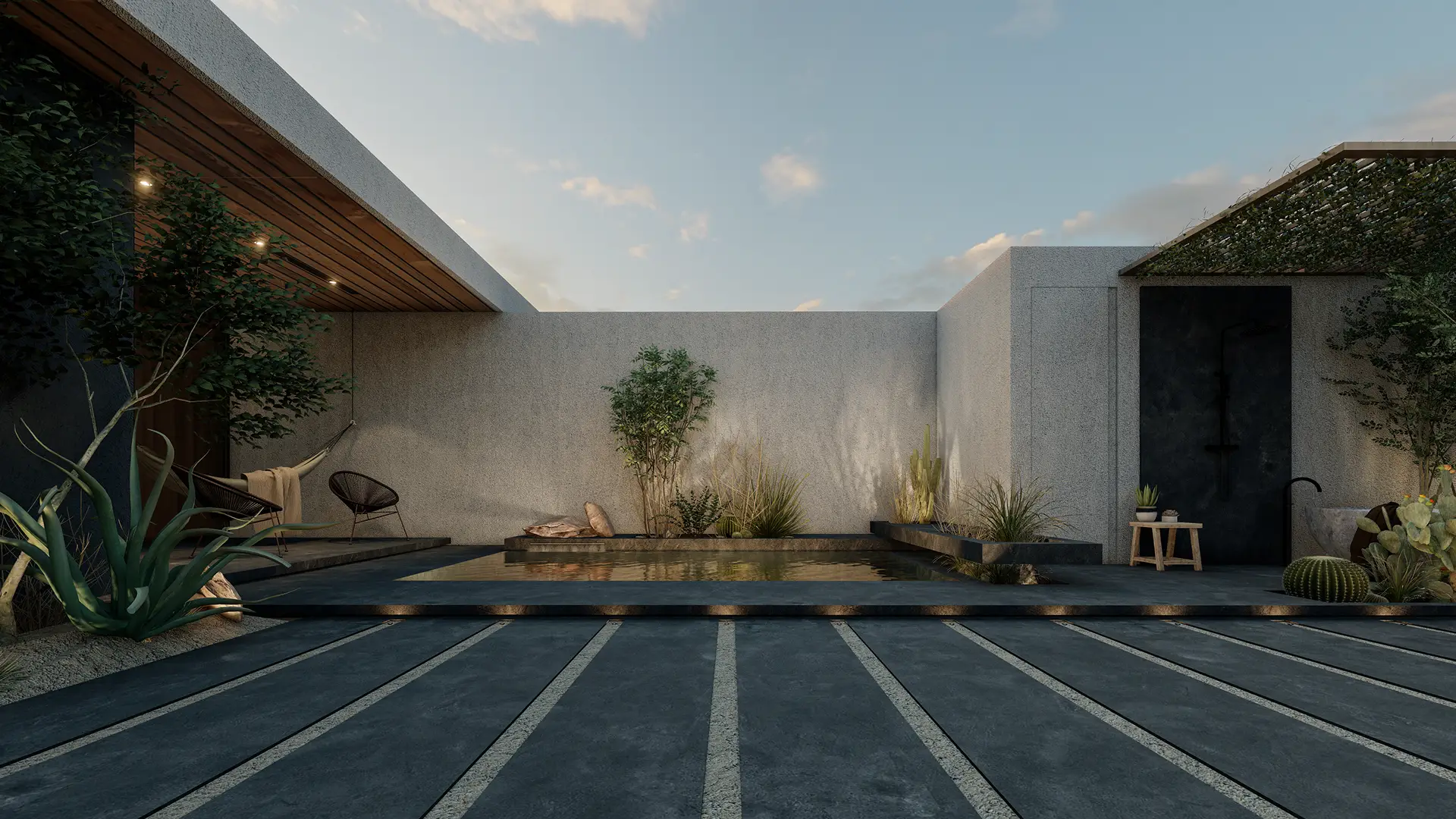
Sculptural plants, natural rocks, and lush trees create a layered landscape through contrast. A shallow reflection pool sits flush with the paving, amplifying the geometry around it.
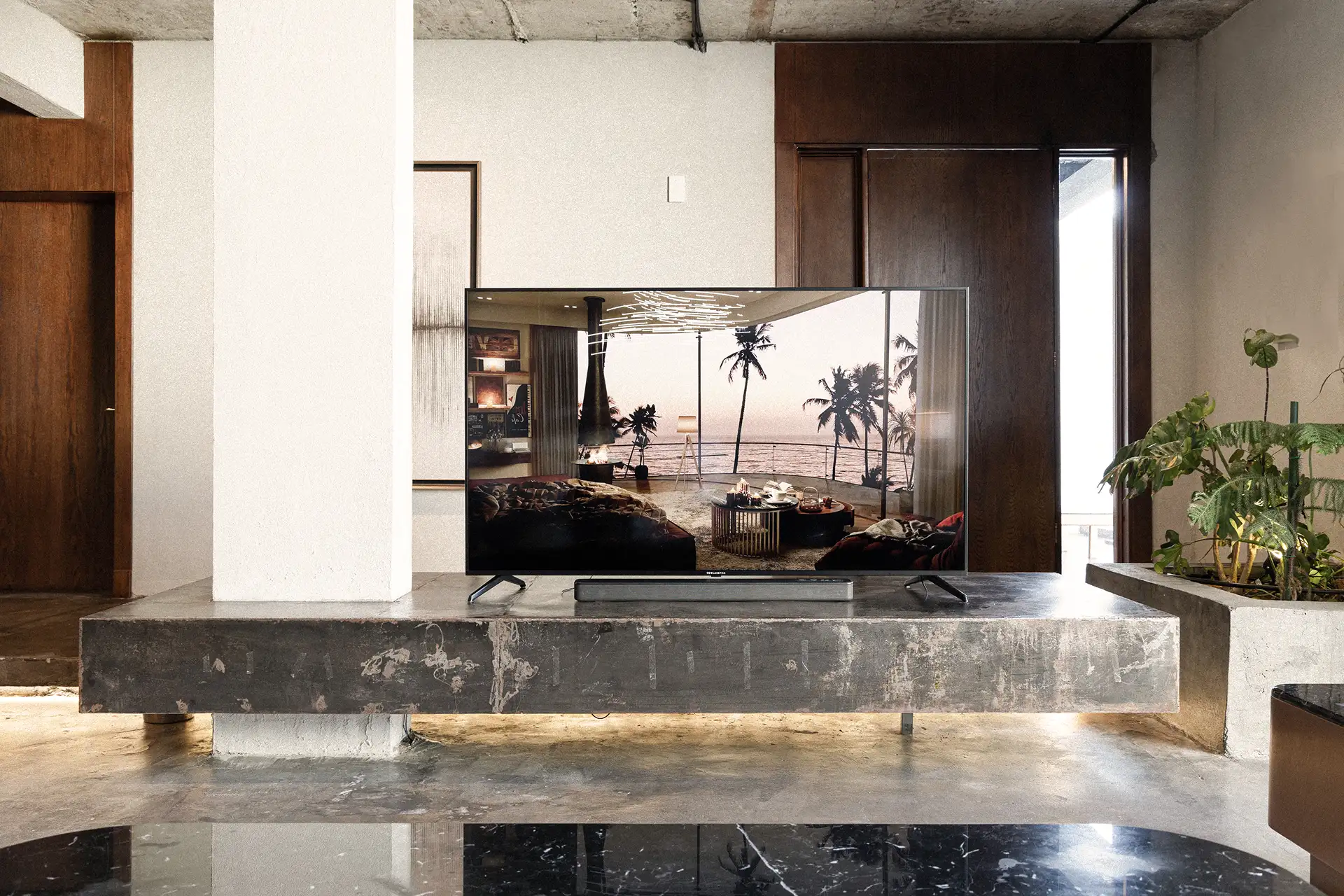
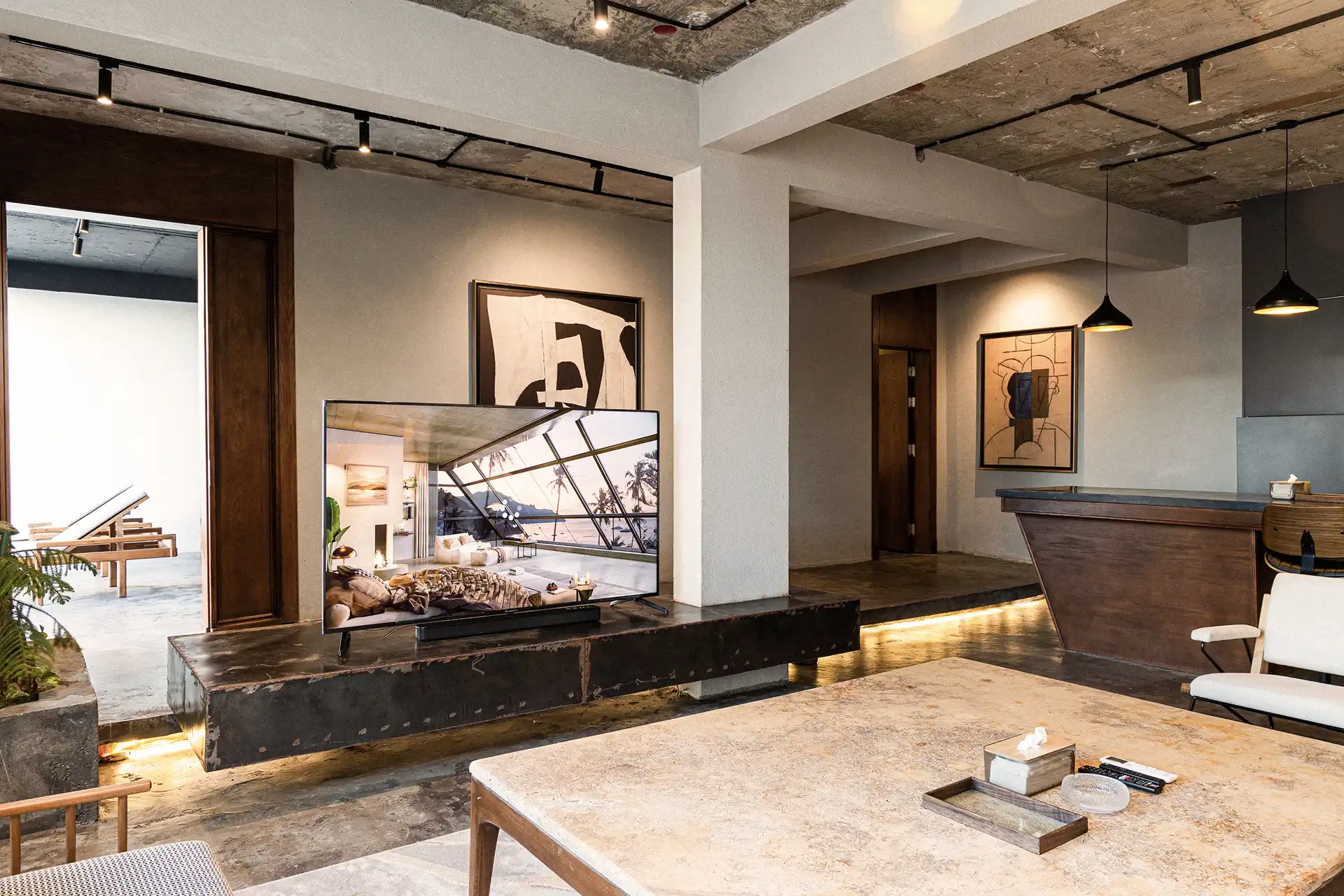
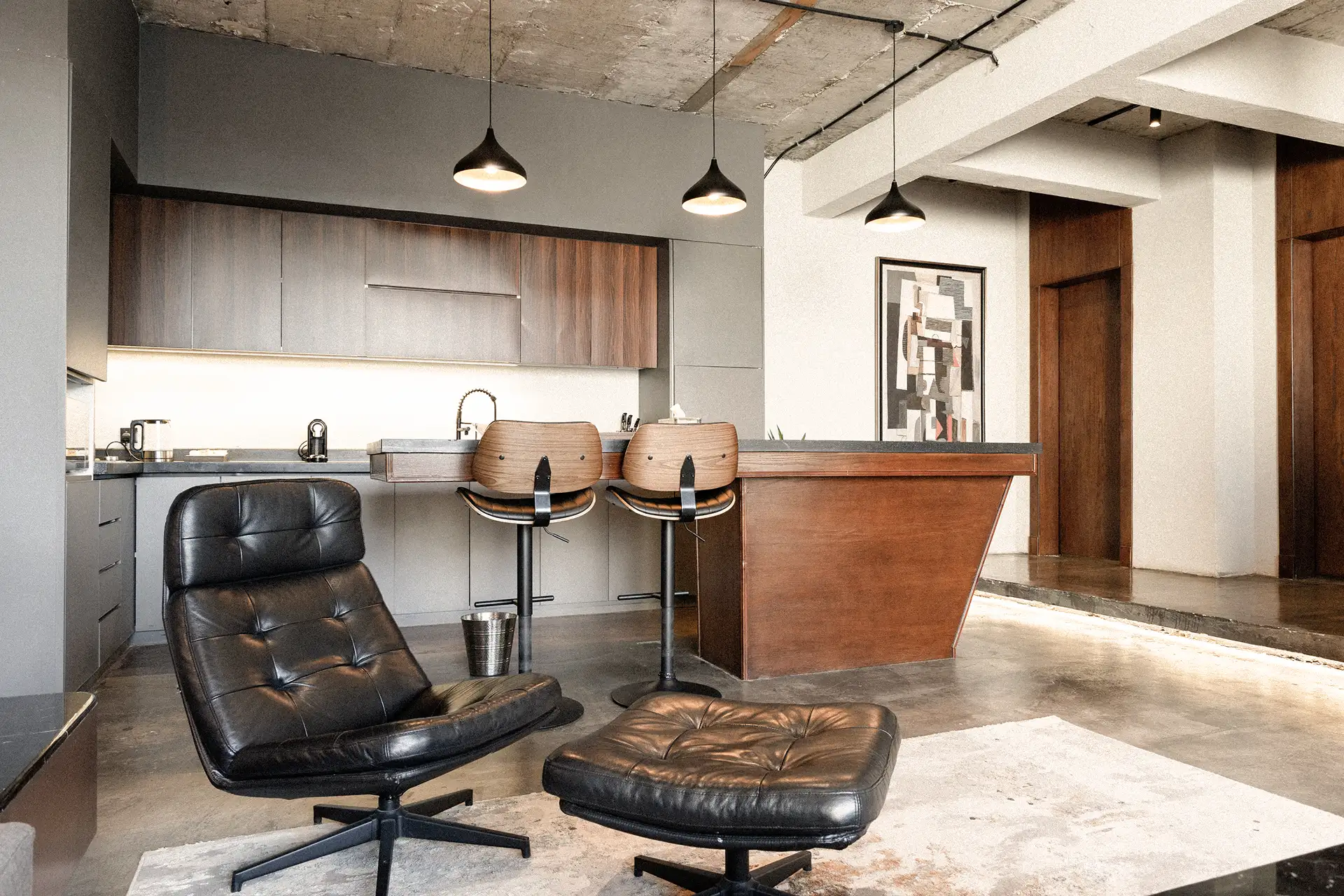
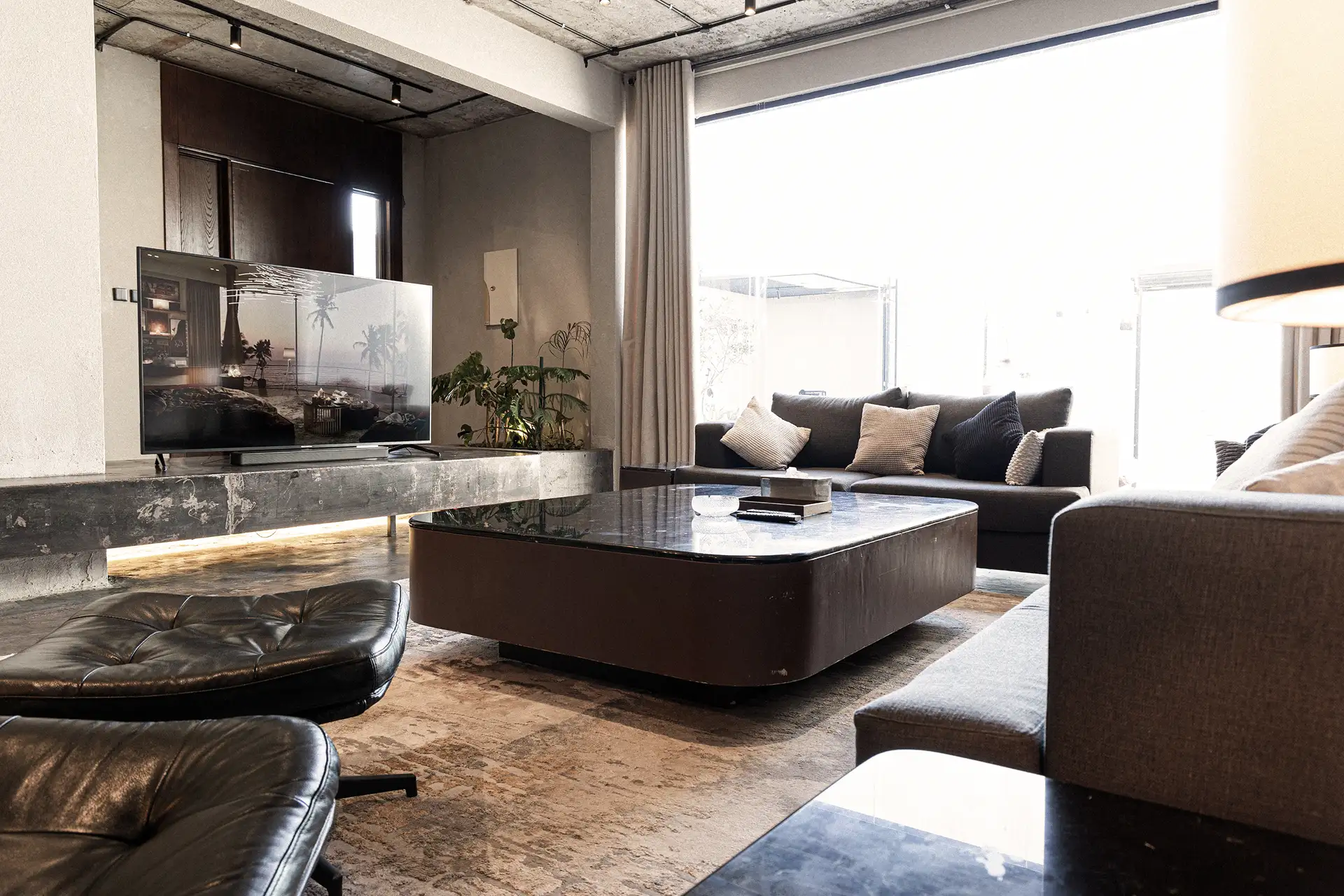
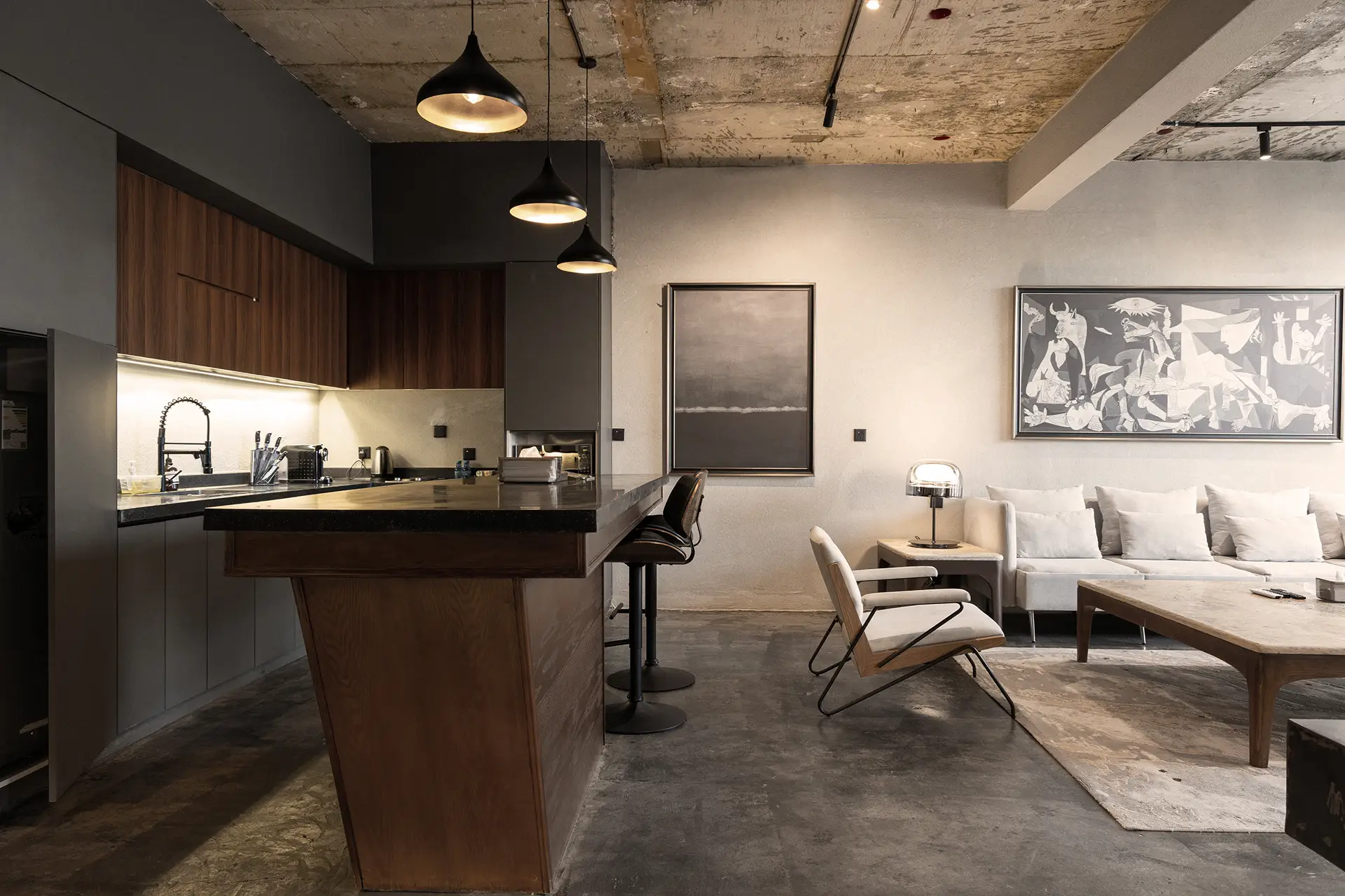
Step inside and the palette shifts. Warm sand-toned plaster walls meet dark exposed timber beams, creating a warmth the exterior deliberately withholds.
Large glazed openings bring natural light deep into the living spaces, while woven rattan pendants hang above a live-edge timber kitchen island with dark timber cabinetry. In the bathroom, a raw stone vessel sink, pebble mosaic floor, and trailing ivy bring the layered character of plants.
Quiet Architecture, Considered in Every Detail
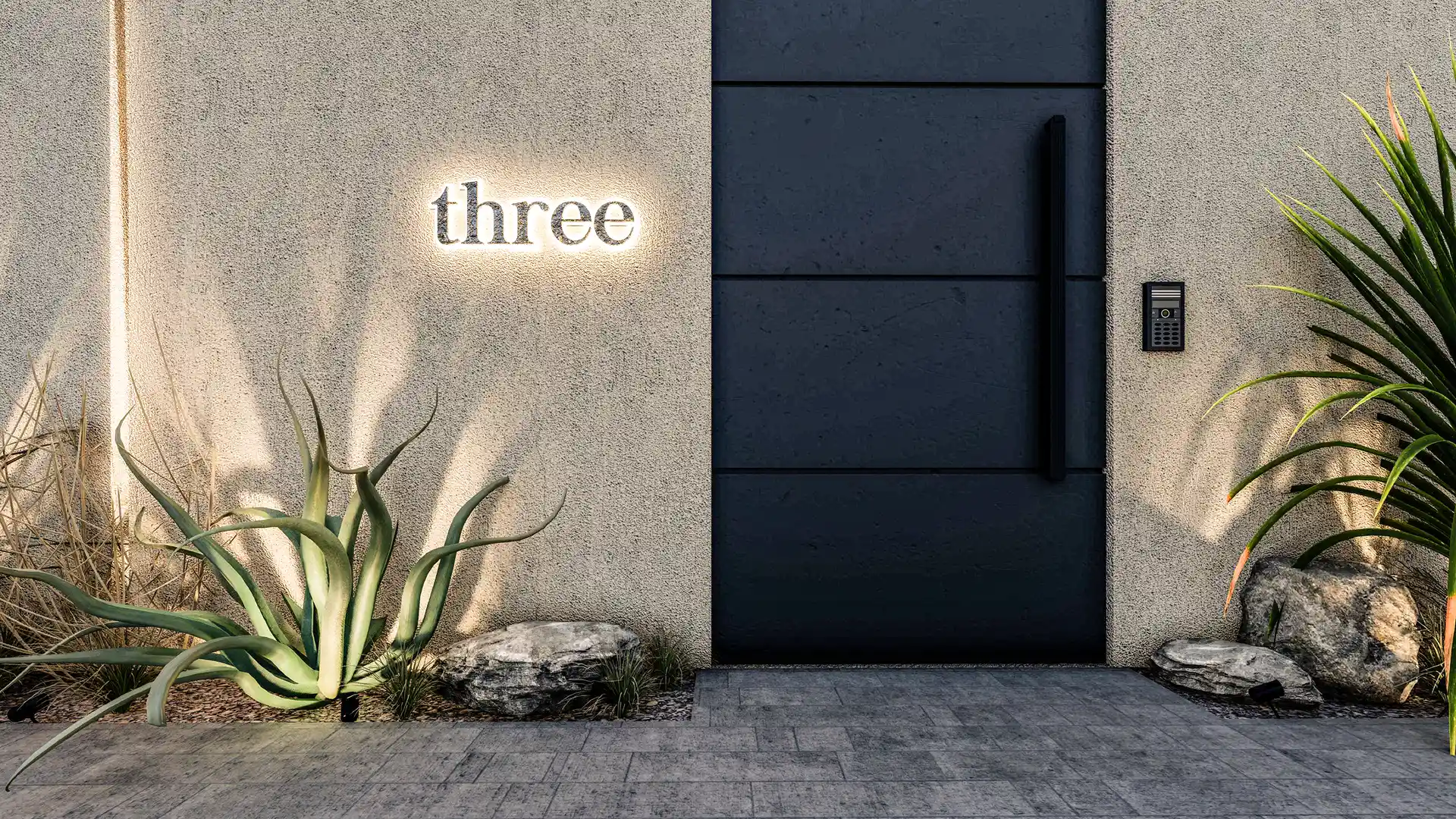
Al-Qirawan's exterior is defined by what it chooses to leave out. Cool grey concrete walls run clean and uninterrupted, their surface texture doing the work that ornament never could. Floor-to-ceiling glazing opens the interior to the courtyard, while a timber soffit introduces warmth at the threshold. Dark basalt paving extends toward the water feature, with gravel filling the gaps and turning the ground into part of the material composition.
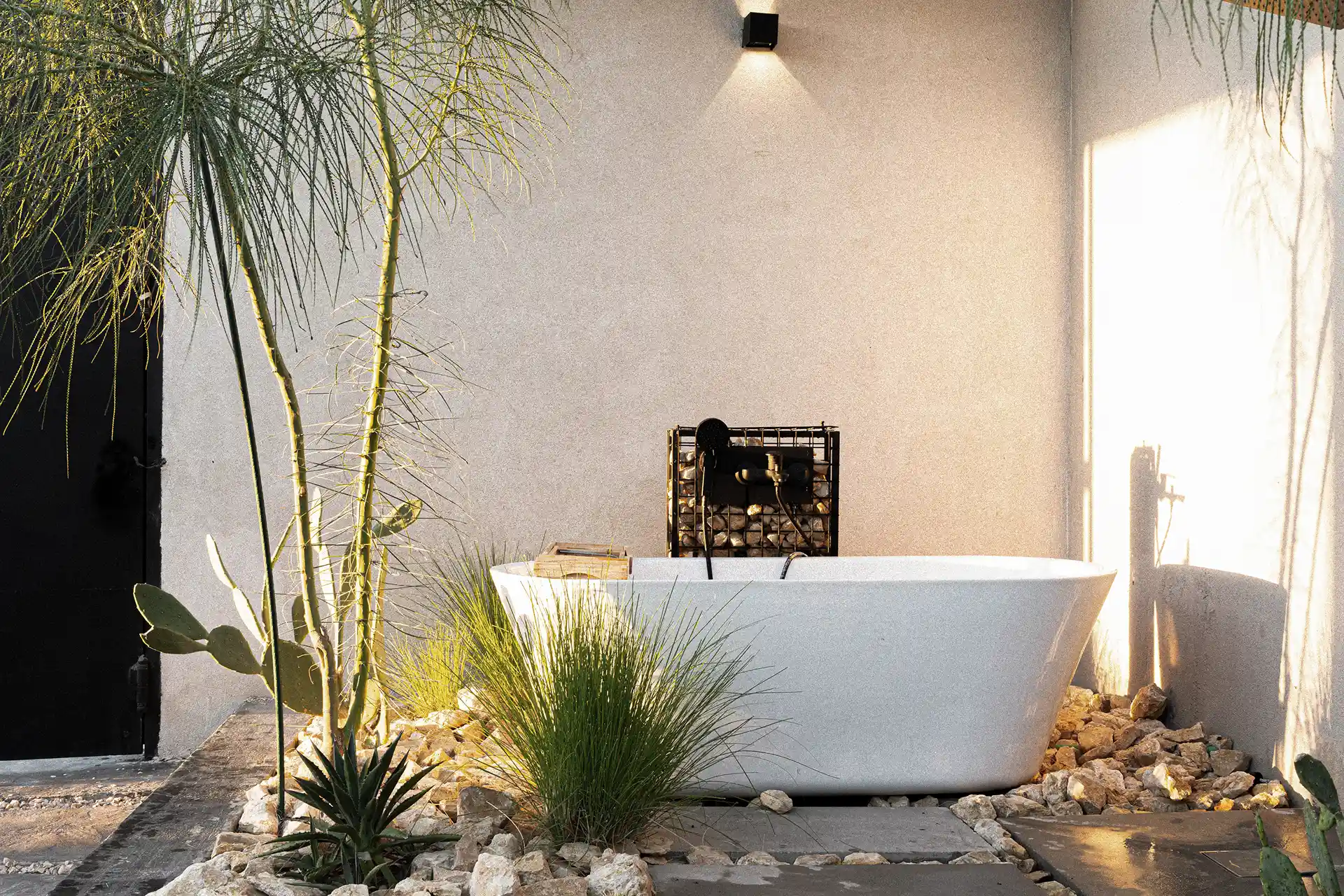
The landscaping follows the same discipline. Cacti, agave, ornamental grasses, and natural rocks sit against the concrete, while lush trees add height and softness. The shallow reflection pool sits flush with the paving, amplifying the surrounding geometry. At dusk, ground-level lighting traces the paving edges, revealing a different character as the light shifts from natural to artificial.
Natural Timber, Raw Concrete & Texture
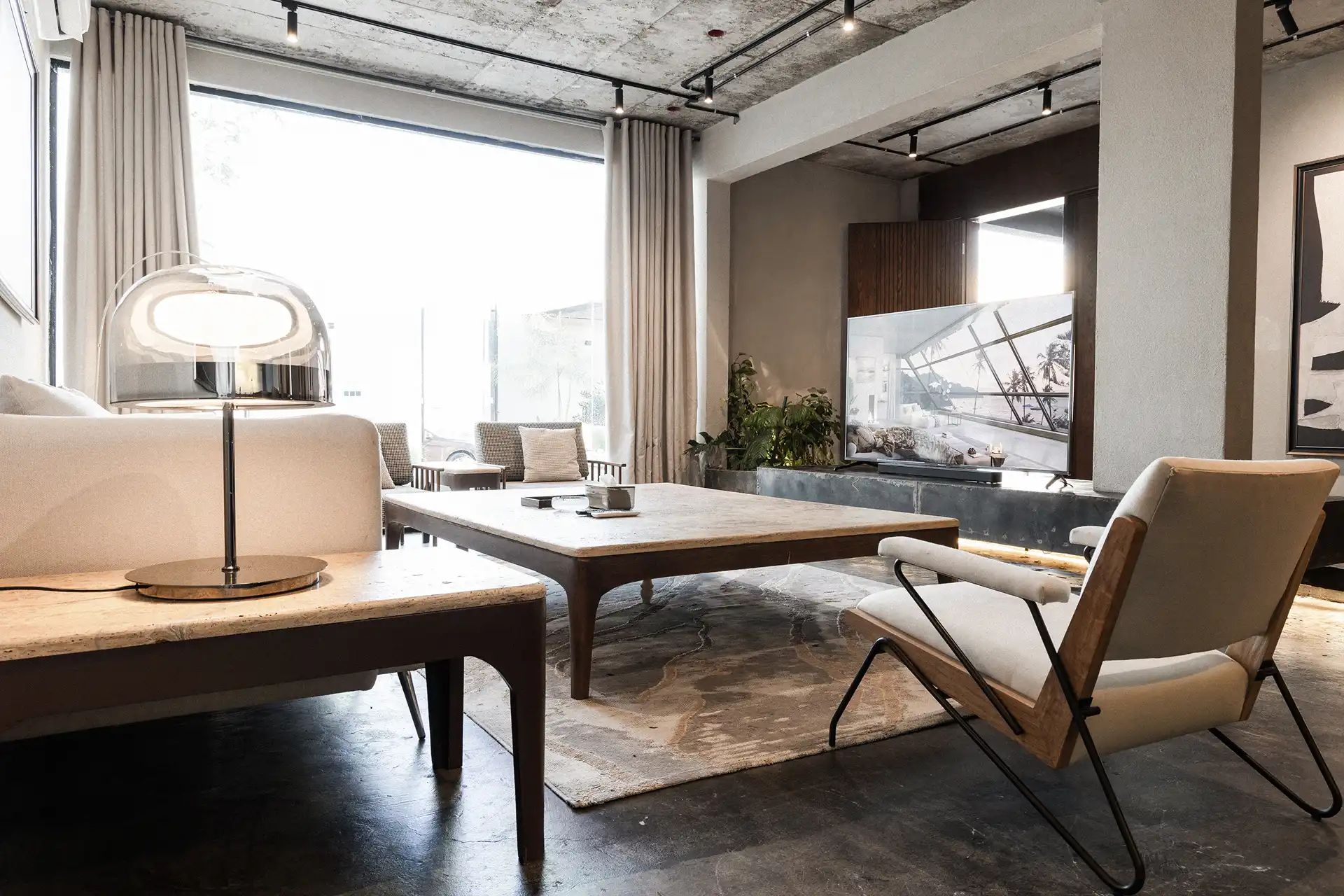
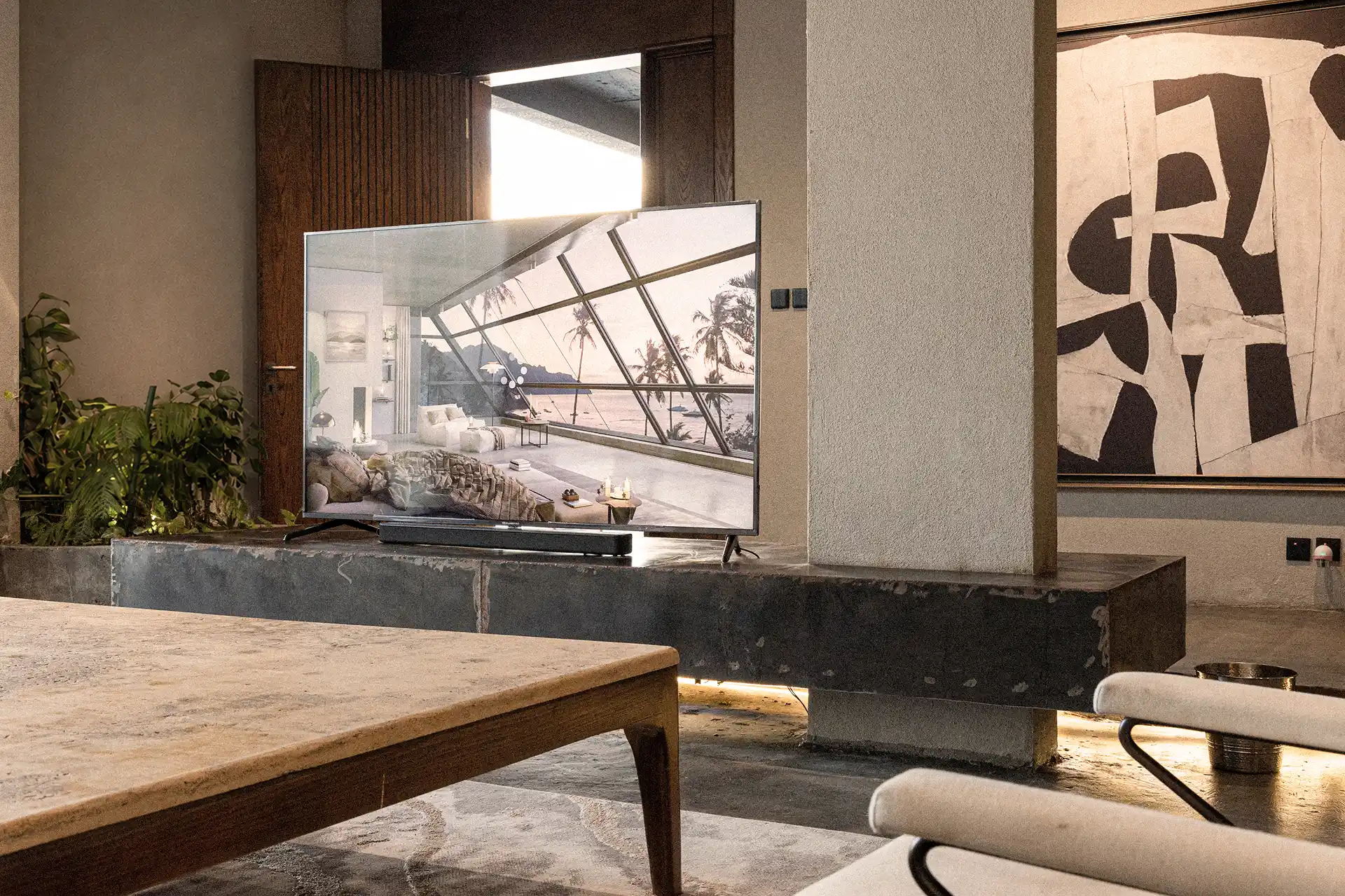
The interior of Al-Qirawan is where the restraint of the exterior gives way to material richness. Textured plaster walls in warm sand tones catch the natural light from the large glazed openings, while dark exposed timber beams add warmth and weight. The raw concrete floor ties the materials together, allowing each texture to remain visible.
The kitchen brings a concentrated layer of craft, with a live-edge timber island, dark timber cabinetry with wire mesh fronts, and open shelving. Oversized woven rattan pendant lights add a handmade quality, while built-in plaster niches display ceramic vessels and sculptural objects.
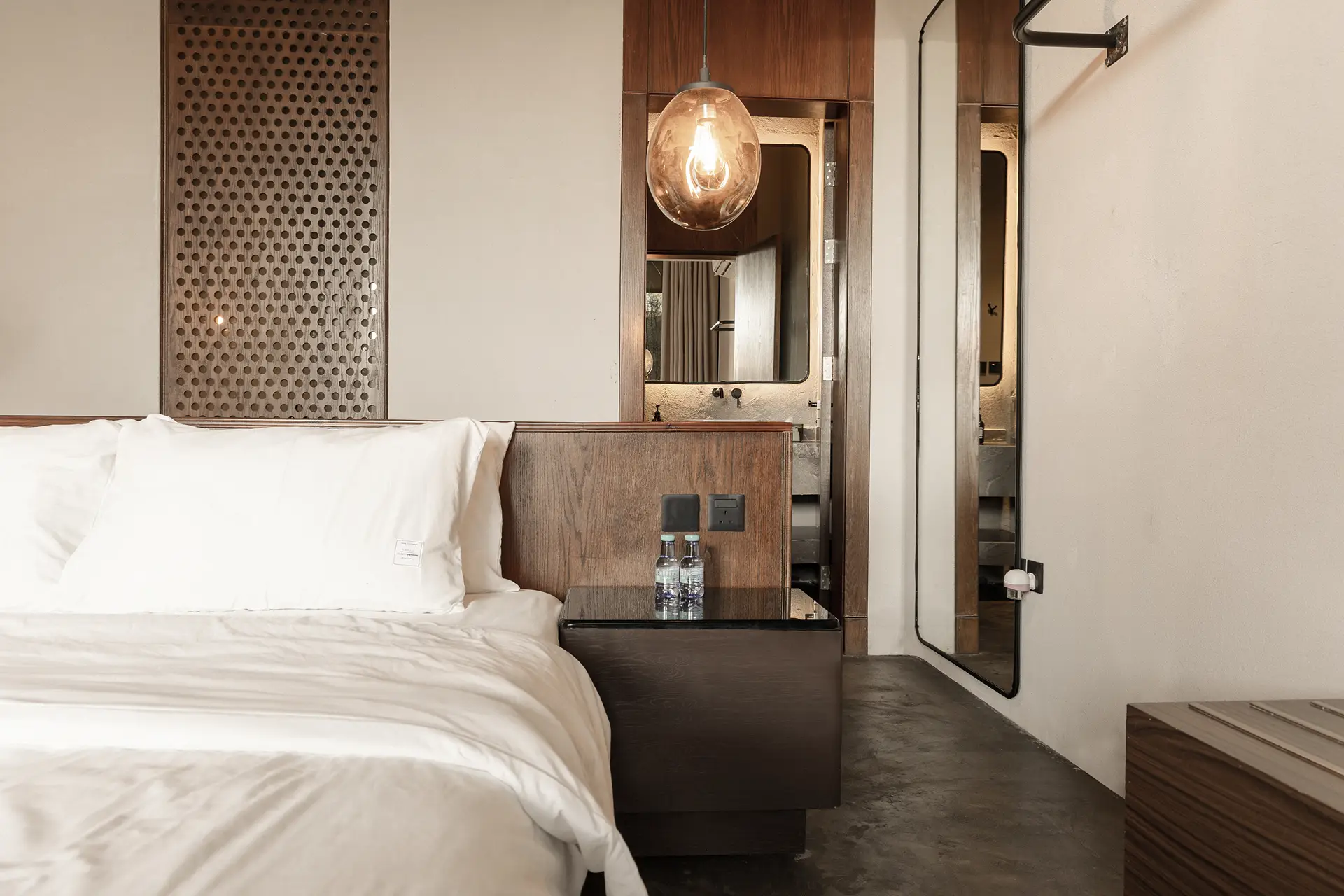
The entrance corridor continues this material language with large handwoven macramé hangings in cream, terracotta, and black covering the wall from floor to ceiling. A perforated timber screen filters light into the space, casting shifting patterns across the concrete floor. Throughout the resort, raw materials and refined details work together to create an interior that feels consistently considered.
A Palette Built on Natural Instinct
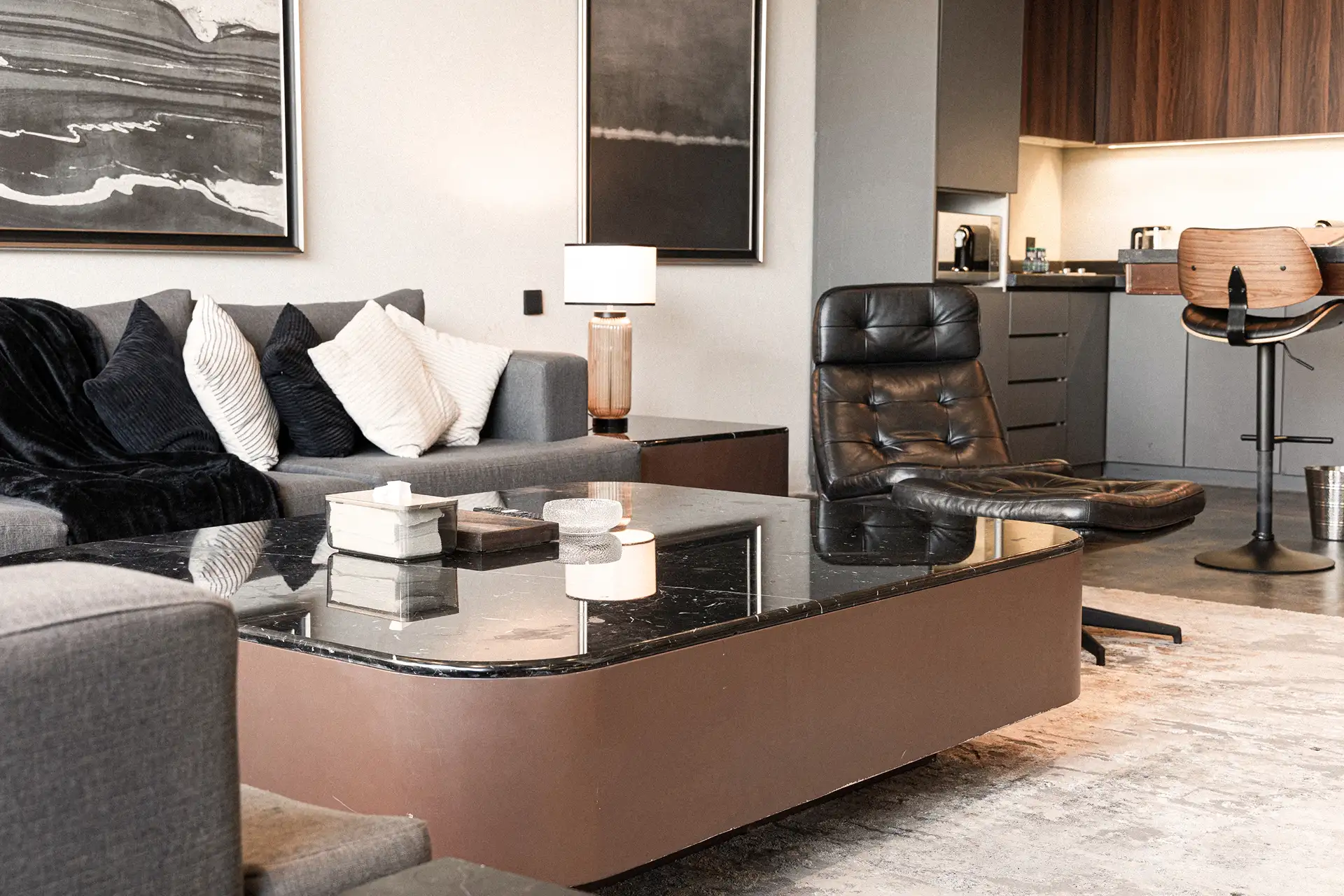
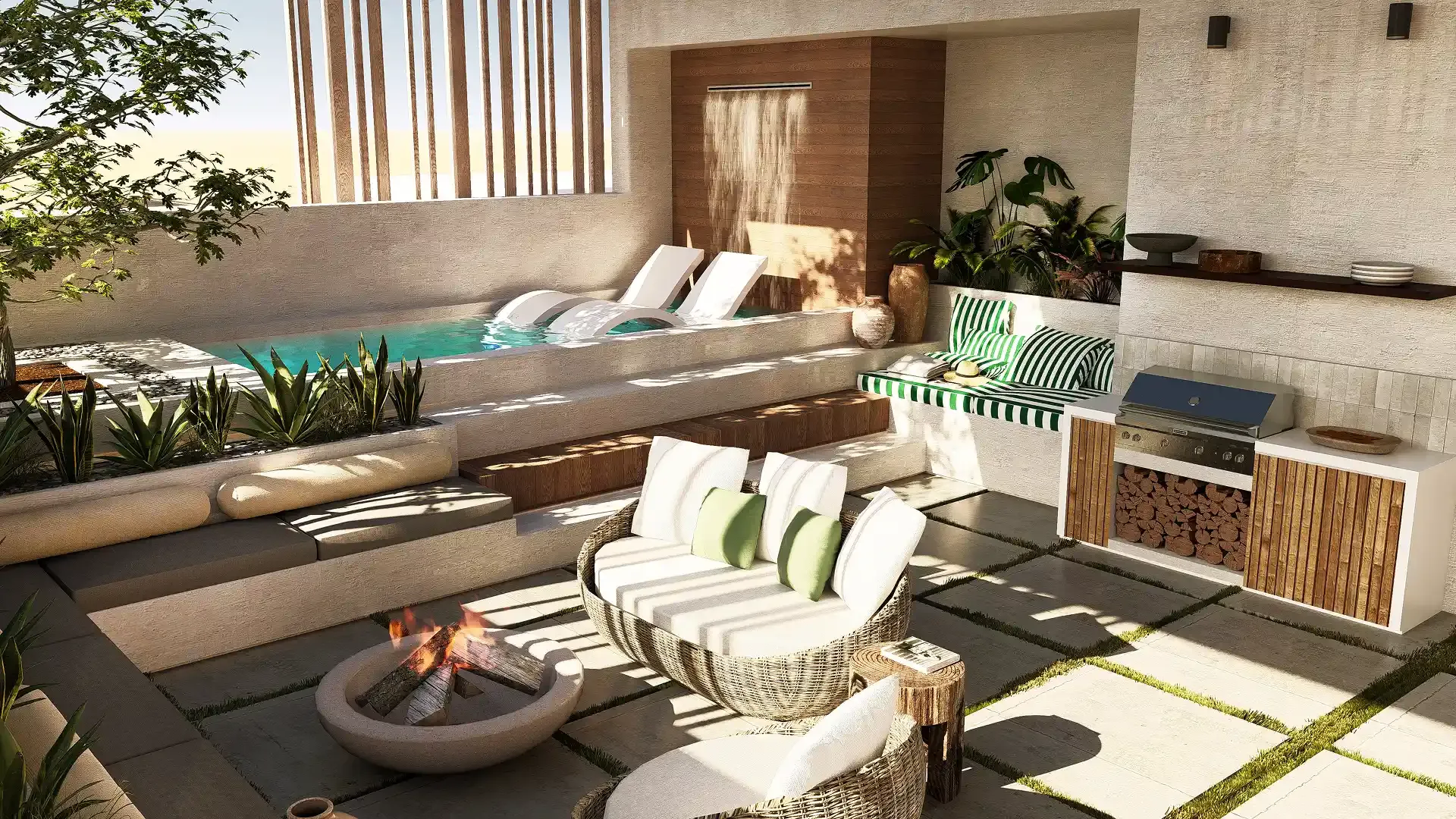
The palette establishes dialogue between austere geometry and warm interior materials. The exterior's concrete provides a neutral canvas against which landscape elements create visual interest. Interior spaces employ warm neutrals anchored by natural timber and stone, extending seamlessly to exterior transitions. Soft furnishings in natural textiles—linen, cotton, wool—reinforce material authenticity. Decorative elements remain restrained; woven baskets and curated plantings contribute character without excess. The palette spans warm beiges, soft grays, and earth tones creating visual flow. Water features animate architectural forms as material elements. Warm lighting enhances sensory quality of materials while supporting the contemplative retreat atmosphere.